
Amplified Vault: A Monthly Deep Dive into Iconic Albums & Artists
Amplified Vault unpacks legendary discographies, decoding what made them matter and why they continue to resonate. This month, we revisit one of Britpop’s brightest success stories with Supergrass, a band that arrived as teenage troublemakers before quietly evolving into one of Britain’s most rewarding rock groups. While many of their contemporaries were defined by rivalry, headlines, or reinvention, Supergrass built a catalog that simply grew stronger with age. Their records mix infectious hooks, fearless experimentation, and a natural sense of fun without ever sacrificing musicianship. From the youthful rush of I Should Coco to the richly textured songwriting of Road to Rouen, Supergrass proved that growing older did not mean growing predictable. Six albums may seem like a modest run, but there isn’t a weak link in the bunch.
Amplified Vault: Decoding Supergrass – Ranking Every Album

Youth. Melody. Controlled chaos.
Formed in Oxford in 1993, Supergrass quickly became one of the defining bands of the Britpop era while refusing to be confined by it. Consisting of Gaz Coombes, Mick Quinn, Danny Goffey, and later Rob Coombes as a full-time member, the group combined punk energy, psychedelic pop, glam rock, and classic British songwriting into a sound that was entirely their own. Their debut album made them stars before most of the band had turned twenty, but rather than chasing the success of “Alright,” Supergrass kept pushing forward. Each album revealed another side of the band, from explosive guitar pop to sophisticated arrangements and introspective songwriting. While many of their peers faded fast, Supergrass quietly assembled one of the deepest catalogs of any British band from the 1990s.
Bonus Entry: Live on Other Planets (2020)
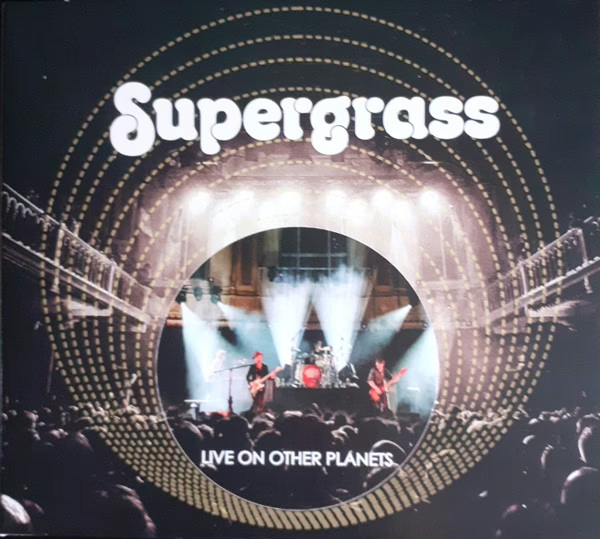
Released a decade after the band’s original farewell and following their celebrated reunion, Live on Other Planets serves as a reminder of just how exceptional Supergrass were on stage. Recorded across performances in Europe, the collection spans their entire career, bringing fresh energy to familiar favorites while highlighting just how naturally these songs translate to a live setting. Gaz Coombes sounds energized, Danny Goffey remains a whirlwind behind the kit, and the band’s chemistry feels completely intact despite the years apart. Rather than simply recreating the studio recordings, Supergrass injects each performance with looseness and spontaneity, making the songs feel newly alive. It is more than a reunion document. It is evidence that these songs have aged remarkably well, and that their reputation as one of Britain’s great live acts was earned.
Key Track: “Richard III (Live)” – The band’s ferocious live attack turns one of their signature songs into an even bigger thrill.
A vibrant live document that captures Supergrass at full strength and reminds us why they remain such a beloved band.
6. Diamond Hoo Ha (2008)
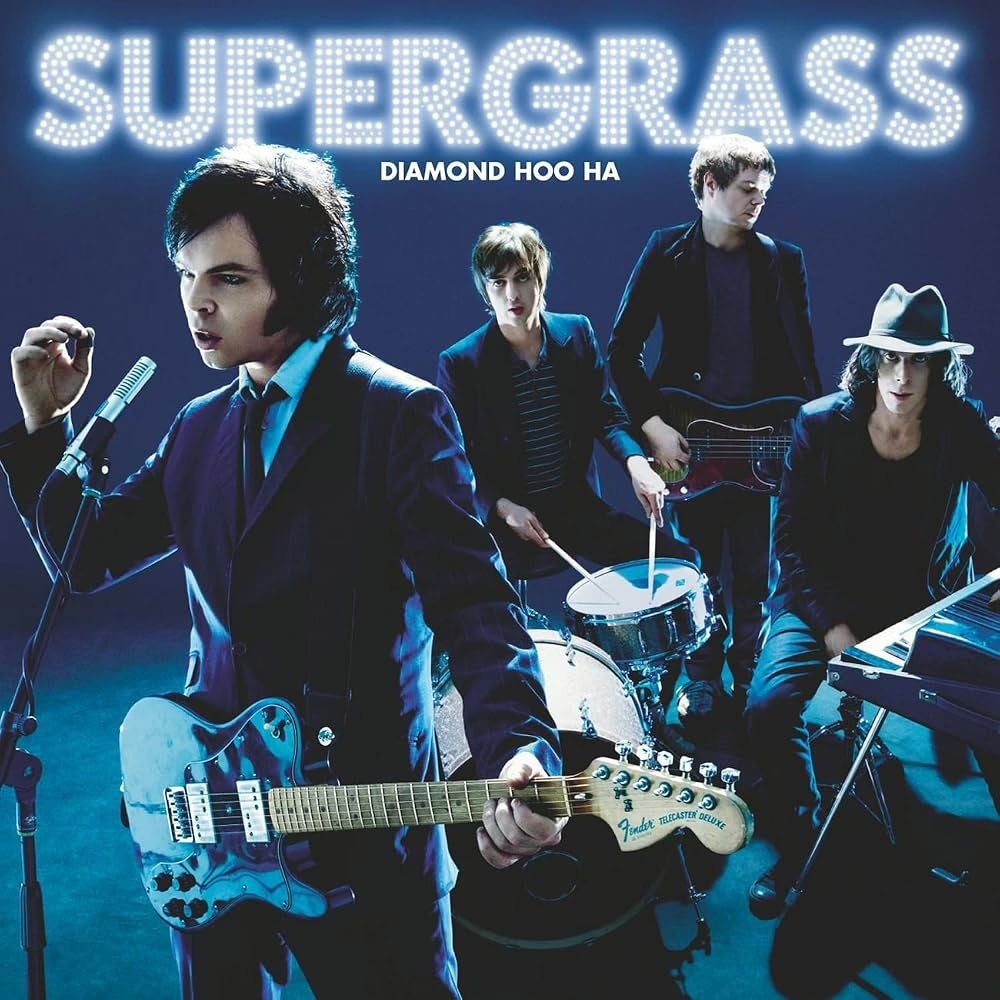
By the time Diamond Hoo Ha arrived, Supergrass had already established itself as one of Britain’s most dependable rock bands. Rather than attempting another dramatic reinvention, they doubled down on swagger, riffs, and glam rock attitude. The result is a record that feels playful, loud, and unapologetically fun. Tracks like “Diamond Hoo Ha Man” and “Bad Blood” channel the spirit of T. Rex and David Bowie while still sounding unmistakably like Supergrass. The guitars are heavier, the grooves are thicker, and Gaz Coombes delivers one of his boldest vocals. It may not dig as deep as some of the albums ranked above it, but it never tries to be anything other than an exhilarating rock and roll record. As a farewell to their studio career, it goes out grinning.
Key Track: “Diamond Hoo Ha Man” – A glam rock stomper built on oversized riffs, big grooves, and the band’s unmistakable sense of fun.
A loud, joyful farewell that proves Supergrass never forgot how to have fun.
5. Life on Other Planets (2002)
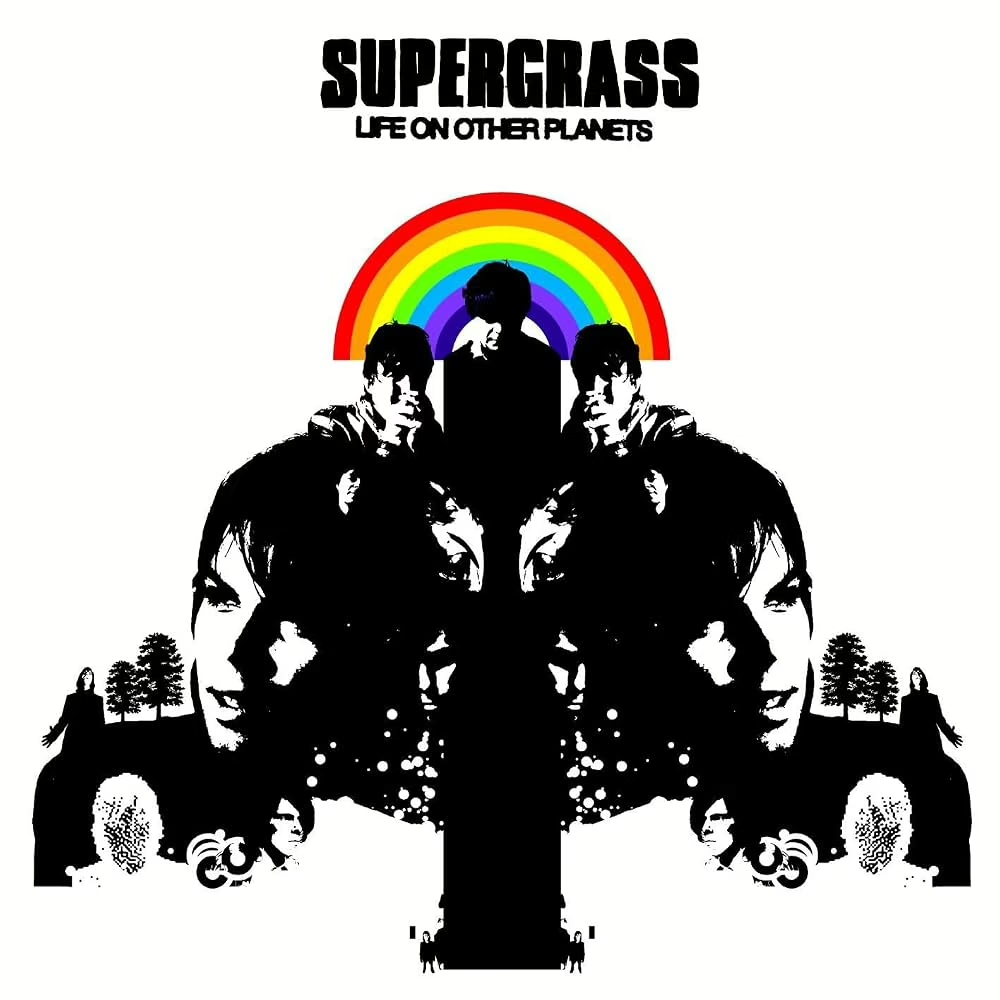
Often overlooked between two of the band’s most celebrated records, Life on Other Planets deserves far more recognition than it typically receives. The album finds Supergrass sharpening the pop instincts of their self-titled record while adding a heavier classic rock influence. Songs like “Grace” and “Seen the Light” show a band that could land an immediate hook without losing an ounce of craft. There is an easy, unforced quality to the record, as if every chorus and guitar line sits right where it should. While it lacks the bold step forward of In It for the Money, it rarely puts a foot wrong. Play it again and you catch another memorable tune or overlooked arrangement, which makes it one of the band’s most underrated albums.
Key Track: “Grace” – One of the band’s purest pop songs, pairing a big melody with the offhand charm that defined Supergrass in their prime.
A collection of expertly crafted songs that deserves a much wider audience.
4. Road to Rouen (2005)
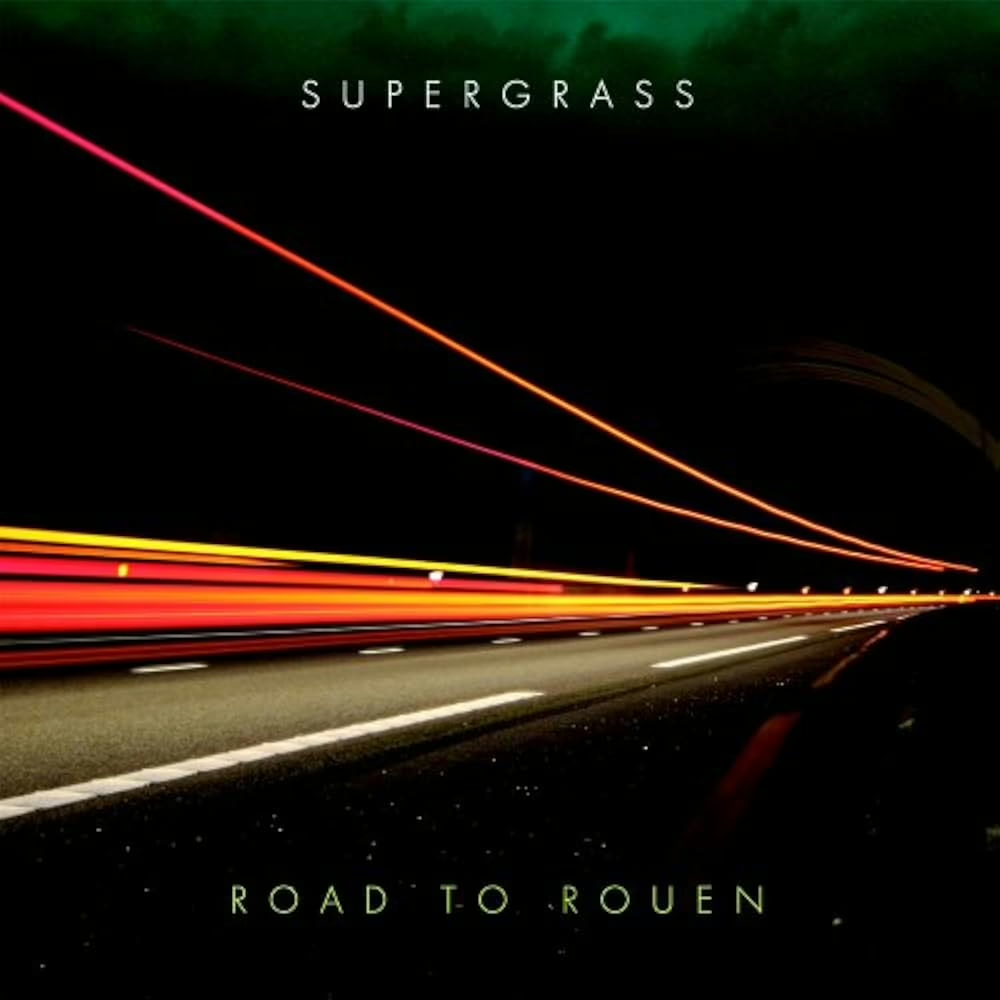
Life on Other Planets already hinted at a more mature Supergrass, and Road to Rouen took that all the way. Written during a period of personal change for the band, the album trades its earlier restlessness for something more reflective, without losing the ear for melody that set them apart. The arrangements become richer and longer, acoustic textures replace some of the earlier distortion, and Gaz Coombes turns in the best singing of his career. Songs like “St. Petersburg” and “Low C” unfold slowly, showing an emotional depth few would have expected from the band a decade earlier. Some listeners initially struggled with its quieter approach, but time has been extraordinarily kind to Road to Rouen. It has climbed a notch on my list since I first ranked it. It stands today as one of the most moving records Supergrass ever made, and it shows just how gracefully the band matured.
Key Track: “St. Petersburg” – A spare, restrained centerpiece that captures the band’s newfound patience while holding onto their knack for a great tune.
A patient, low-key album that gives up new details every time you return to it.
Supergrass Essentials: Deep Cuts & Hidden Gems
Beyond the biggest singles lies a catalog filled with overlooked gems that showcase Supergrass’ growth from Britpop upstarts into one of Britain’s most versatile rock bands.
“Melanie Davis” – In It for the Money B-Side
It backed “Going Out,” the lead single that Parlophone put out on 26 February 1996, more than a year ahead of the album. It’s a organ groovy foot tapper that is a lower-key tune consistent with the more exploratory corners of that period.
“Sofa (Of My Lethargy)” – I Should Coco
A sprawling, druggy comedown that shows the debut wasn’t all sugar rush
“Brecon Beacons” – Life on Other Planets
Here is the deep cut that fits the record’s looser, classic-rock lean.
“Whiskey & Green Tea” – Diamond Hoo Ha
One of the album’s strongest deep cuts, balancing muscular riffs with an irresistible groove.
“Coffee in the Pot” – Road To Roen
A short instrumental that just works and it is worth a mention as it was really different for a Supergrass album.
“Wait for the Sun” – In It For the Money B Side
An atmospheric, autumnal track from the In It for the Money era that easily could have been included on the record.
3. I Should Coco (1995)
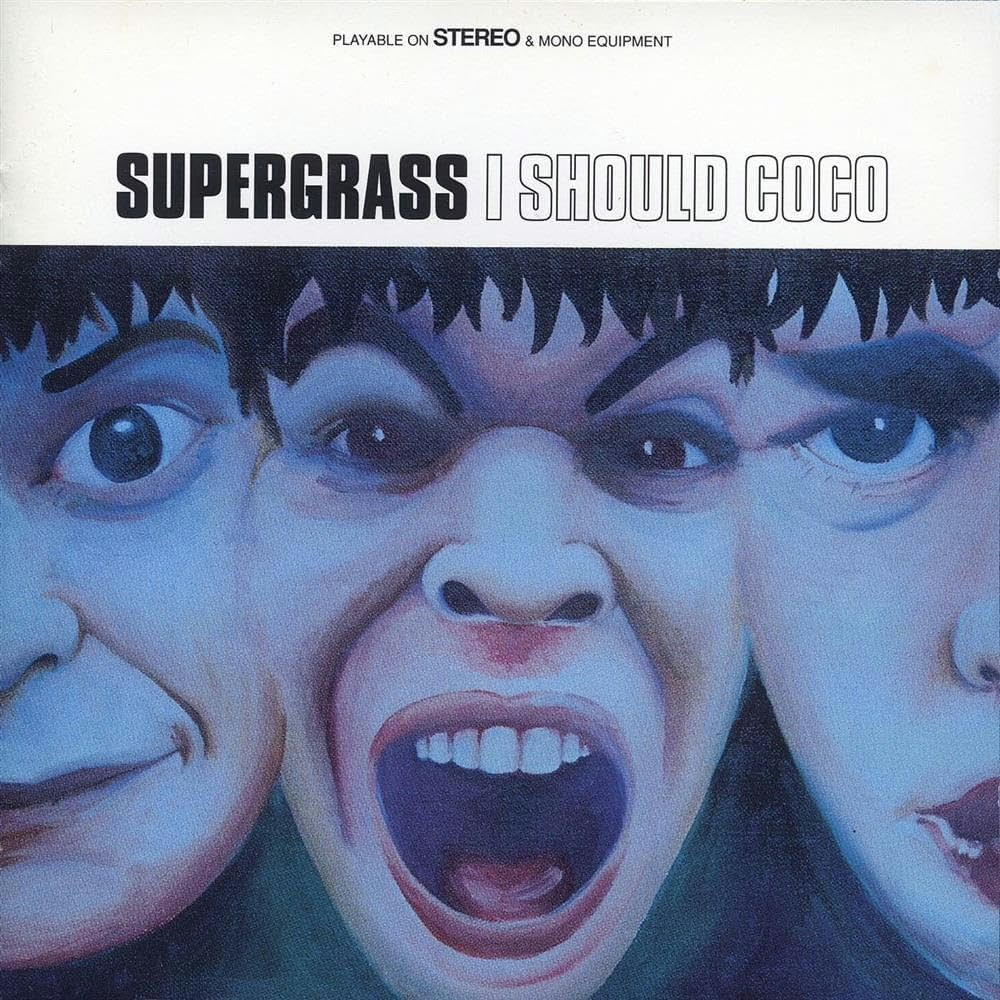
Few debut albums capture the excitement of being young as well as I Should Coco. Recorded while the band members were still in their teens, the album crackles with humor, nerve, and an almost reckless sense of possibility. Songs race by with punk speed, Beatles-inspired melodies, and a distinctly British wit that helped make Supergrass a breakout act of the Britpop movement. While “Alright” became the anthem of carefree youth, the album runs much deeper than its biggest hit. “Caught by the Fuzz” turns Gaz Coombes’ real-life arrest into another breakneck single, while “Lose It” and “Time” show a band whose playing already outstripped their years. Listening today, I Should Coco has barely aged. The songwriting may not have the polish of the records that followed, but its joy, urgency, and raw enthusiasm are impossible to resist. It is the sound of a young band discovering just how far talent and chemistry could take them.
Key Track: “Caught By The Fuzz” – A blistering single inspired by real events that introduced Supergrass with all the speed, humor, and cheek they would become known for.
A debut overflowing with teenage energy, irresistible hooks, and pure Britpop spark.
2. Supergrass (1999)
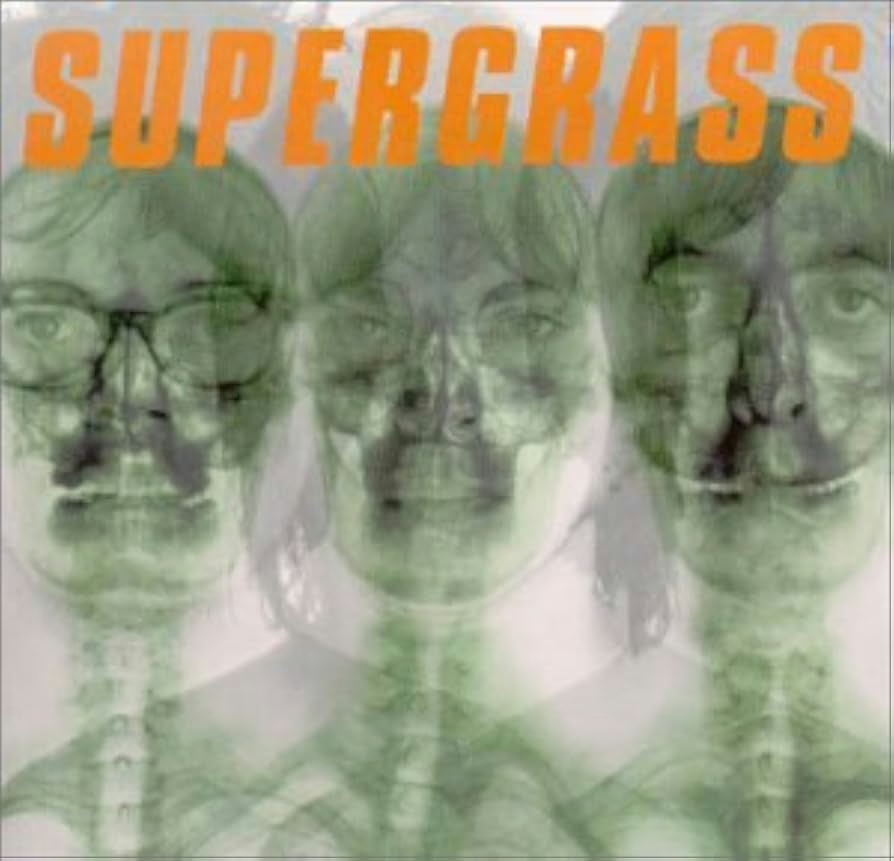
By their third album, Supergrass no longer had anything to prove. The pressure of living up to a celebrated debut had faded, and the band responded with their most well-rounded set of songs. Supergrass finds them blending the ambition of In It for the Money with the immediacy that made their earliest work so catchy. “Moving” opens the record with one of the best songs they ever recorded, while “Pumping on Your Stereo” proves they had lost none of their playful bounce. Elsewhere, “Born Again” and “Mama & Papa” show a group growing comfortable with fuller arrangements and more nuanced songwriting. There is an assurance running through this record that you can hear on every song. Each song feels purposeful, and the record flows cleanly from start to finish. It may not receive the same universal praise as its predecessor, but it has since become one of the band’s most complete and replayable albums. On many days, this is the Supergrass record that keeps calling me back.
Key Track: “Moving” – A soaring, lushly arranged opener that captures the band’s growing range while staying unmistakably Supergrass.
An assured, finely crafted album that bridges youthful energy and grown-up songwriting.
1. In It for the Money (1997)
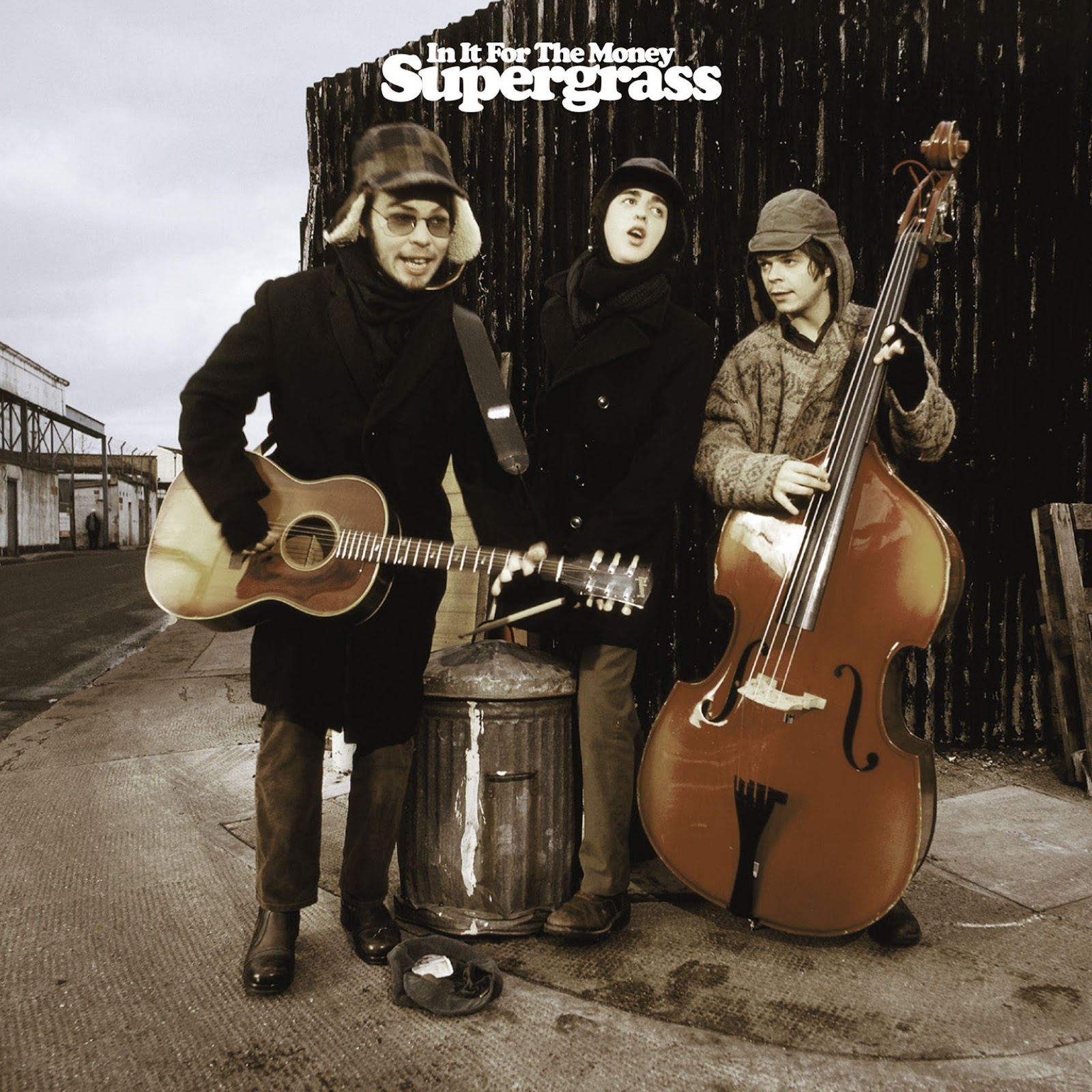
In It for the Money confirmed Supergrass as one of Britain’s finest rock bands. Rather than repeating the formula that made them stars, they expanded every part of their sound. The guitars filled out, the arrangements grew bolder, and Gaz Coombes emerged as one of his generation’s most gifted songwriters. “Richard III” explodes with raw power, “Sun Hits the Sky” folds psychedelia into perfect pop craft, and “Late in the Day” gives the band one of its most emotional moments. Even the deeper cuts turn up new details on repeat plays, in a way few Britpop albums can match. The record feels ambitious without becoming self-important and has a touch of polish but never loses its edge. Nearly three decades later, its hooks still sound fresh, and it remains the defining statement of Supergrass’ career. At this point, I would also call this record one of the essential albums of the Britpop era.
Key Track: “Sun Hits The Sky” – A dazzling blend of psychedelic texture, irresistible melody, and inventive songwriting that catches Supergrass at their creative peak.
Their best album, and the record where ambition and craft finally click into place.
Final Groove
Supergrass never became the biggest band of the Britpop era, but they may have left behind one of its strongest bodies of work. Where a lot of their peers chased hype or headlines, Supergrass just kept writing great songs. Each album expanded their sound without abandoning the melody and mischief that were there from the start.
What makes their discography so satisfying is its variety. The explosive rush of I Should Coco, the artistic leap of In It for the Money, the loose command of Supergrass, and the mature songwriting of Road to Rouen all show different sides of the same band. Even their later records keep turning up new strengths instead of rehashing old formulas.
At the center of it all is Gaz Coombes, whose path from charismatic frontman to one of Britain’s finest songwriters mirrors the band’s own growth. Backed by Danny Goffey, Mick Quinn, and Rob Coombes, Supergrass kept favoring great songs over trends and curiosity over complacency.
Three decades after they first burst onto the scene, Supergrass remains one of British rock’s great success stories. Their legacy doesn’t rest on one big hit or one classic album. It comes from six remarkably consistent records that still win over longtime fans and first-time listeners alike. Sometimes the bands that age the best are the ones that never stop growing.

A lifelong fan of new music—spent the '90s working in a record store and producing alternative video shows. In the 2000s, that passion shifted online with blogging, diving headfirst into the indie scene and always on the lookout for the next great release. Still here, still listening, and still sharing the best of what’s new.
- Christopher Anthonyhttps://thefirenote.com/author/canthony/
- Christopher Anthonyhttps://thefirenote.com/author/canthony/

- Christopher Anthonyhttps://thefirenote.com/author/canthony/

- Christopher Anthonyhttps://thefirenote.com/author/canthony/
Very enjoyable breakdown of one of my favourite ever bands. I have to say though that on their third album yes the big three singles are fantastic especially Moving and Mary as a whole album id rank it last. It was the first time id felt they were starting to run out of tunes as so many bands show on their third effort. It really wasn’t until they announced the anniversary tour last year of their debut that I rediscovered later albums and was completely blown away not only by their 2025 gigs (seen them twice and then again at Electric Heart Festival 2026) but the absolute quality of songwriting and power in the delivery. Phenomenal band that hopefully deliver the anniversary tour for In It For The Money.