
Amplified Vault: A Monthly Deep Dive into Iconic Albums & Artists
Amplified Vault unpacks legendary discographies, decoding what made them matter and how they continue to resonate. This month, we dive into the road-worn catalog of Social Distortion, a band that has spent more than four decades carving out its own lane between punk rebellion and American roots tradition. With a new studio album, Born To Kill, arriving in May, their first in fifteen years, the timing feels right to revisit the records that built their legacy. From breakneck hardcore beginnings to outlaw country confessionals and arena-ready anthems, Social Distortion never chased trends. They survived them. This ranking covers their seven studio albums plus one essential live document, and closes with a look ahead at what comes next.
Amplified Vault: Decoding Social Distortion — Ranking Every Album
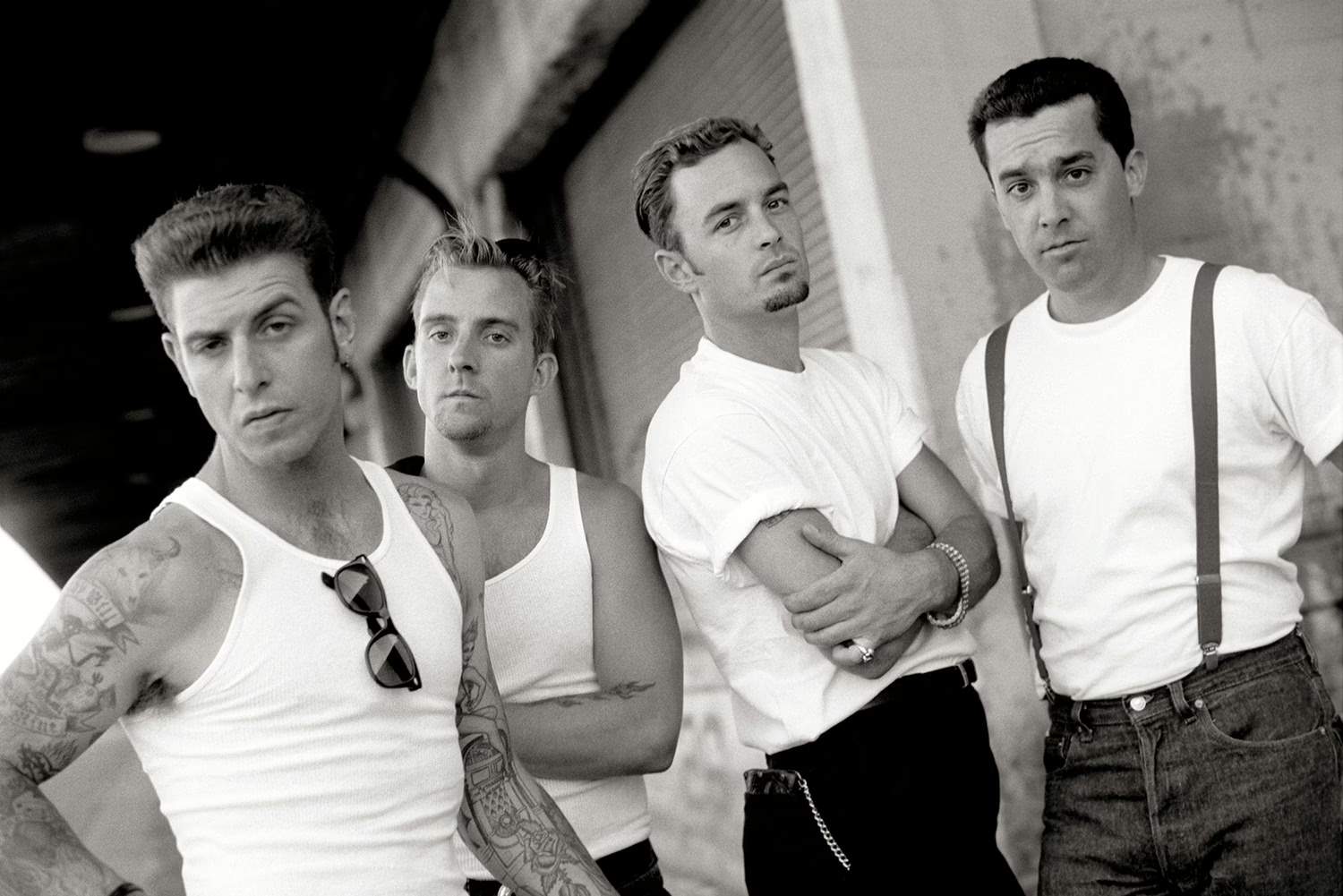
Grit. Guitars. American Originals.
Formed in 1978 in Fullerton, California, Social Distortion emerged from the early Southern California punk explosion alongside bands like Black Flag and The Adolescents. Fronted by Mike Ness, they quickly distinguished themselves from their hardcore peers by weaving classic rock, blues, and country influences into the sound. But the early years were defined as much by chaos as by music — addiction, lineup instability, and near-collapse threatened to end the band before it ever fully began. That they survived at all is part of the story. The late eighties marked a turning point, with a broader, roots-driven approach that set them apart from what remained of the original punk scene. Across decades of turbulence and triumph, Ness remained the anchor, turning personal battles into songs about redemption, regret, loyalty, and survival. With Born To Kill on the horizon, Social Distortion stand not as a nostalgia act, but as living proof that grit and melody can age well together.
Bonus Entry: Live at the Roxy (1998)
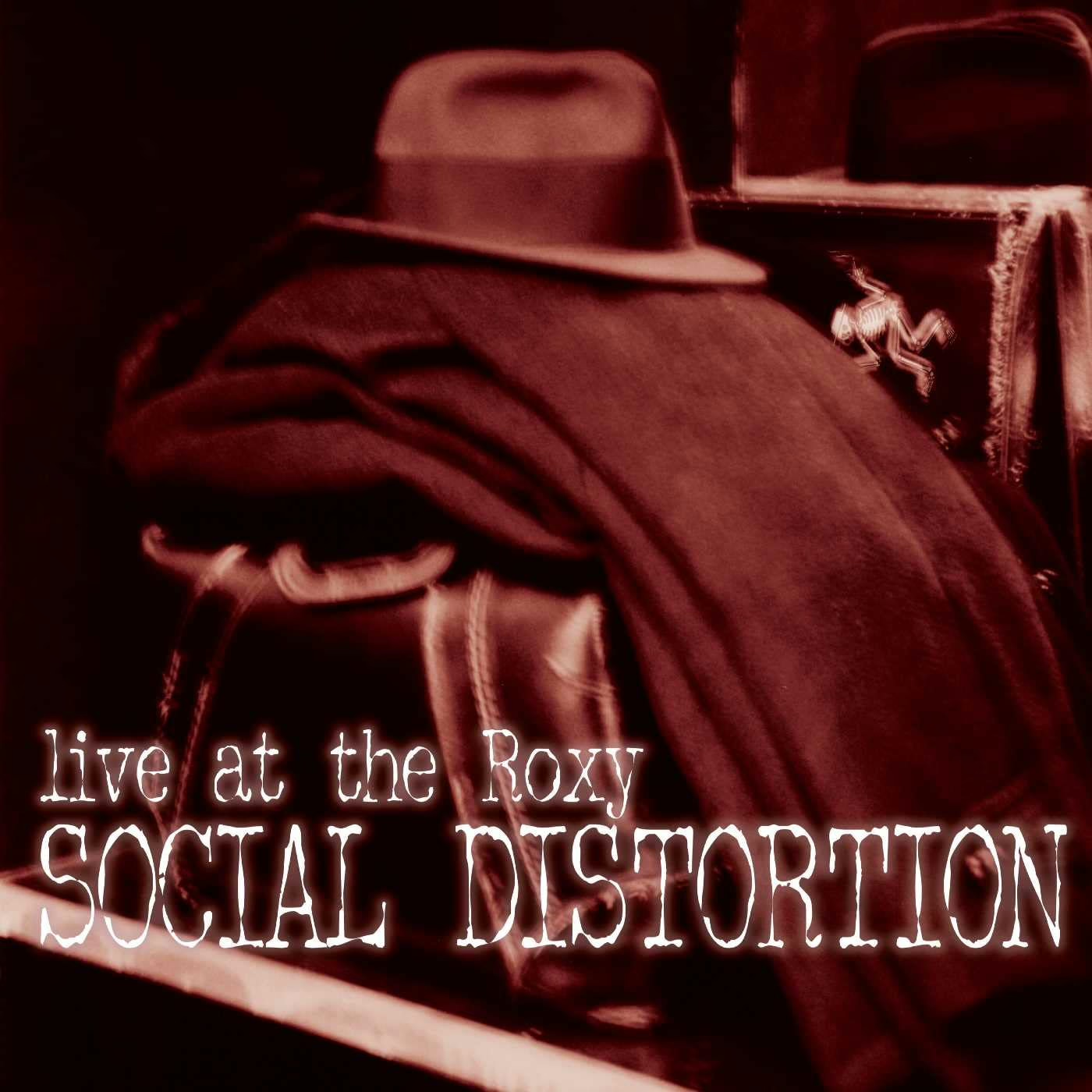
If you want to understand Social Distortion’s reputation as a live band, this is the document. Live at the Roxy captures them in peak form, ripping through classics with urgency and precision. The performances feel immediate and electric, with Ness commanding the stage between songs with dry humor and hard-earned authority. The setlist spans their career up to that point, including covers that nod to their influences and roots. The energy is relentless but never sloppy — instead it reinforces how tight and road-tested this band truly was. As a companion piece to the studio albums, it highlights why their legend extends beyond records. Keep it in mind as you read through the rankings below.
Key Track: “Story of My Life” (Live) — Stripped of studio polish, the song becomes even more powerful in front of a roaring crowd.
A live document that proves their power was never confined to the studio.
7. Hard Times and Nursery Rhymes (2011)
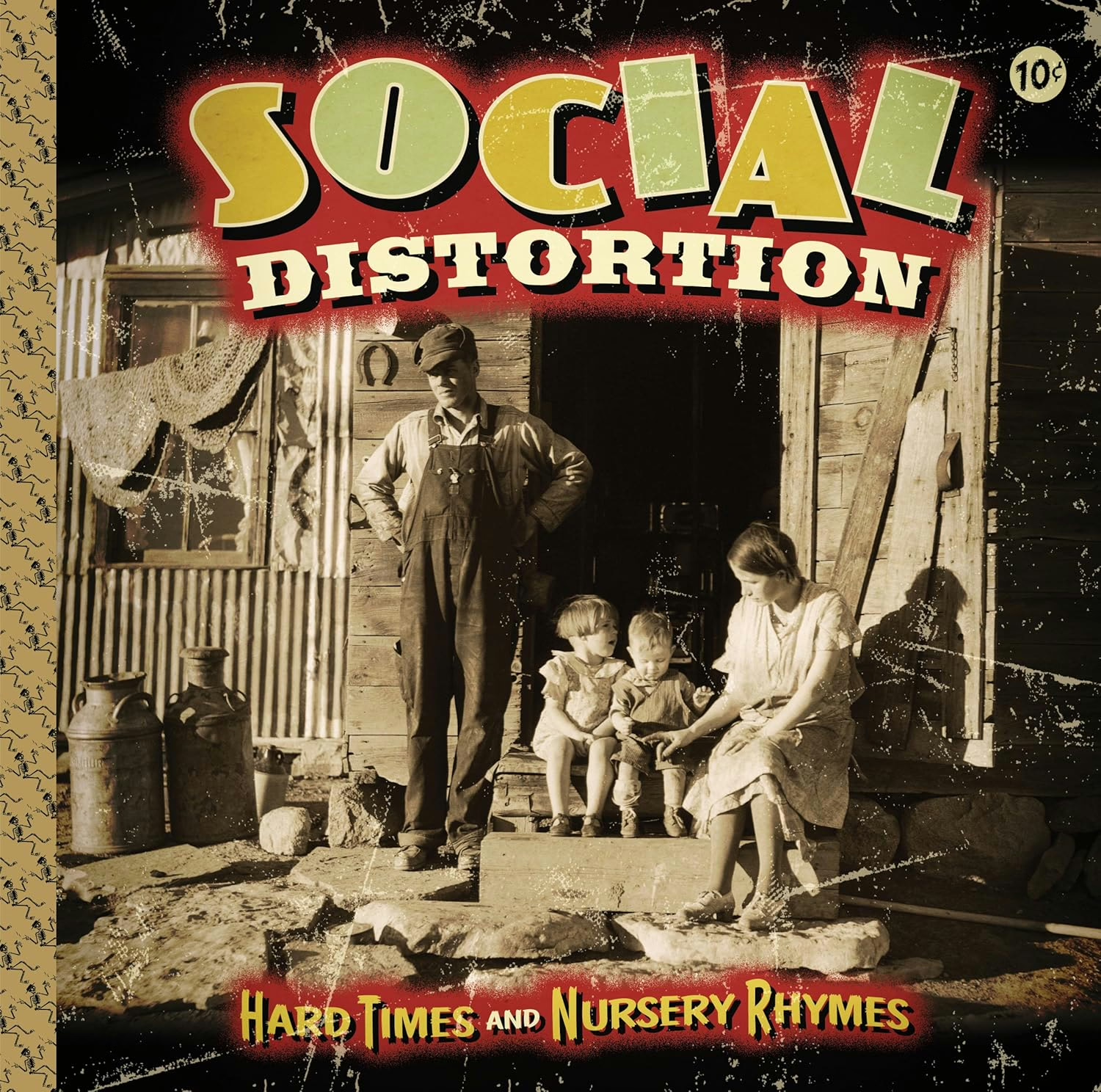
After a seven-year gap, Hard Times and Nursery Rhymes arrived with weight on its shoulders. Produced by Mike Ness himself, the record pulls heavily from the Rolling Stones and early blues and was more classic rock in spirit than hardcore punk. Opener “Road Zombie” sets a dusty tone, and “Machine Gun Blues” roars with swagger and grit. The production is fuller and more muscular than their earlier work, and Ness sounds seasoned rather than scrappy. Lyrically, themes of struggle and perseverance remain front and center, but there’s a sense of reflection rather than urgency. It lands at the bottom of the studio rankings not for lack of quality, but because it treads familiar ground with craft rather than fire. A worthy record — just one that confirms identity more than it deepens it.
Key Track: “Machine Gun Blues” — A stomping, riff-heavy rocker that channels vintage rock and roll menace while still sounding unmistakably Social Distortion.
A seasoned, blues-soaked return that trades youthful fury for hard-earned confidence.
6. Prison Bound (1988)
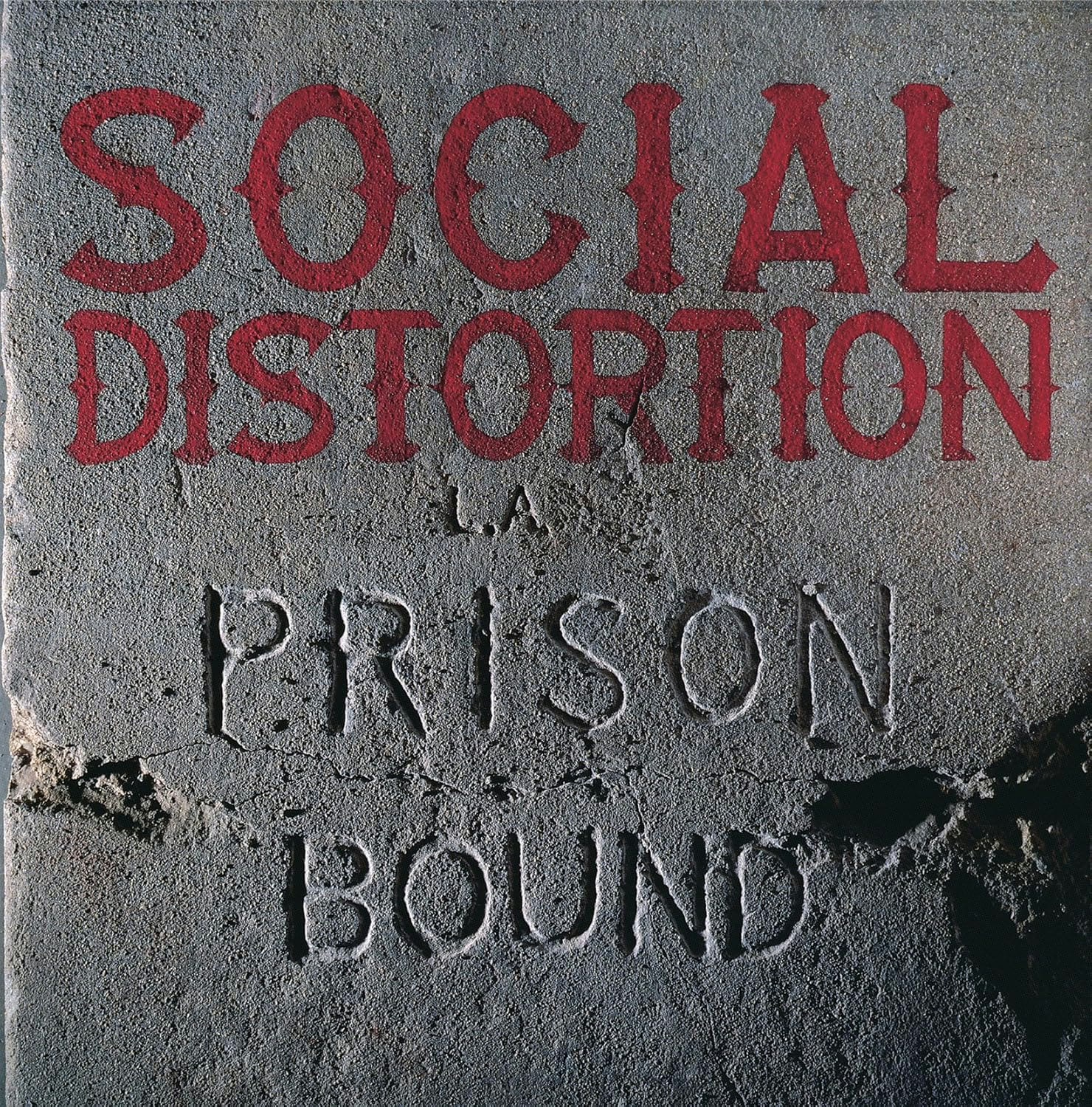
Five years after their debut, Social Distortion returned transformed. Prison Bound marked a decisive shift away from pure hardcore speed toward a darker, outlaw-inflected direction that would define the rest of their career. The title track layers tension, storytelling, and roots imagery in a way few punk bands dared attempt at the time. Ness leans into rockabilly textures without abandoning aggression, and tracks like “Like an Outlaw” and “On My Nerves” reveal a songwriter turning inward. It ranks sixth not because it falls short, but because turning points are easier to appreciate in hindsight than in the moment. The production feels intentionally stark, and some of the songwriting still sounds like a band finding its footing in unfamiliar terrain. That’s also what makes it fascinating. Without Prison Bound, nothing above it on this list exists in quite the same form.
Key Track: “Prison Bound” — An epic slow burn that introduced the band’s outlaw sensibility and expanded their sonic range overnight.
The pivotal record where hardcore roots collided with country darkness — ranked sixth only because what it made possible ranks higher.
5. Sex, Love and Rock ‘n’ Roll (2004)
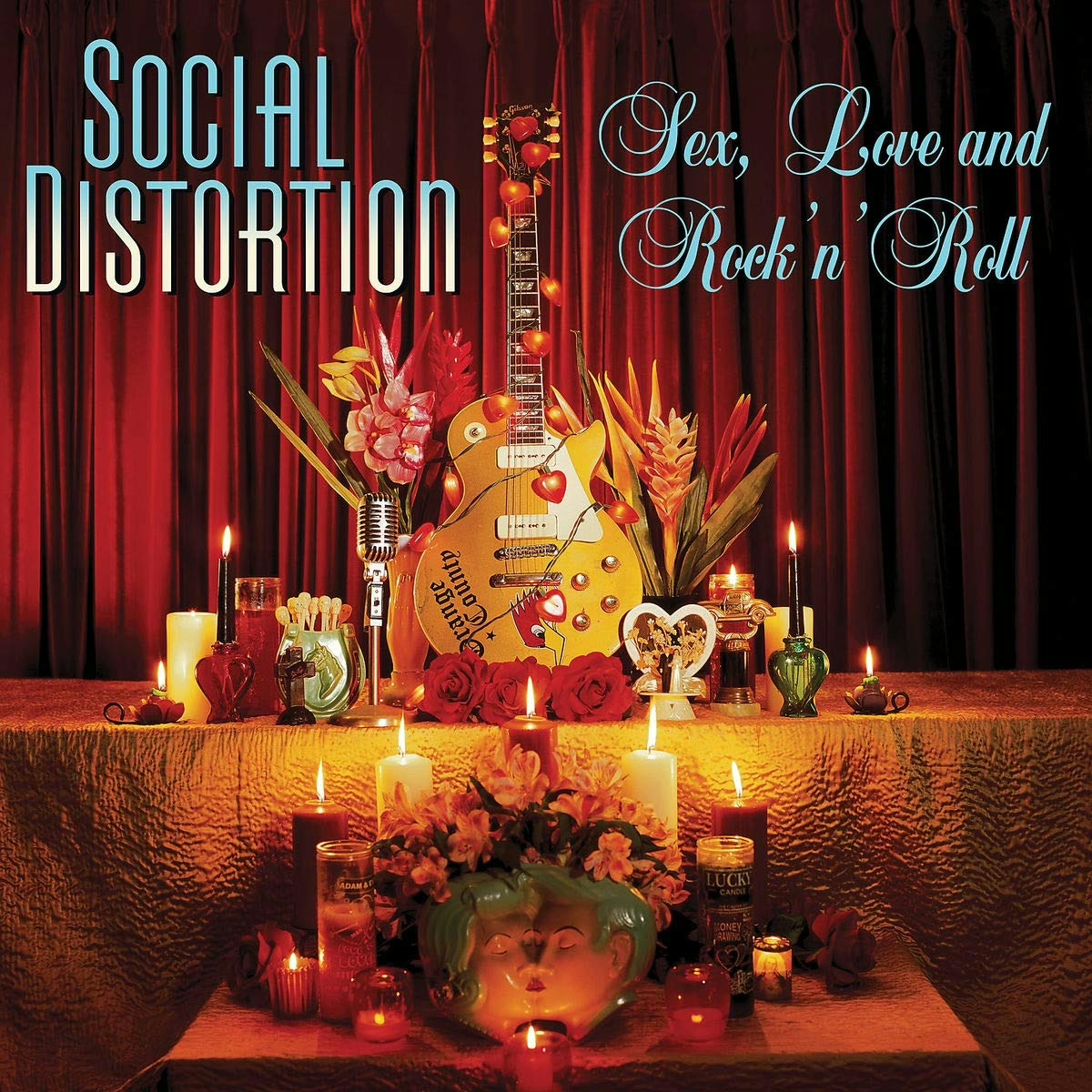
After an eight-year gap following White Light, White Heat, White Trash, Social Distortion returned with a record that felt leaner and more personal. Sex, Love and Rock ‘n’ Roll is built less on chaos and more on reflection. Ness sounds older, clearer, and more deliberate, trading snarling volatility for sharp storytelling. “Reach for the Sky” and “Nickels and Dimes” are anthems of perseverance, while “Don’t Take Me for Granted” feels like a direct address to the fans who stuck around. The production is crisp and focused, letting the songs breathe without overcomplicating them. It may not be as explosive as the band’s peak moments, but it is cohesive and emotionally grounded. This is a band taking stock of its scars and still standing tall.
Key Track: “Reach for the Sky” — A defiant, fist-in-the-air anthem that captures the band’s enduring spirit and hard-won sense of survival.
A mature, focused record that turns hard lessons into steady resolve.
Social Distortion Essentials: Deep Cuts & Hidden Gems
The singles tell one version of Social Distortion’s story. These eight tracks tell another. Spread across standalone singles, album openers, closing tracks, and covers that feel more like confessions than tributes. None of these are the songs that built the legend. All of them are reasons it deserves to last.
“Mainliner” – Wreckage from the Past
One of their earliest singles from 1981, raw pre-Mommy’s Little Monster hardcore that captures the band before they even had an identity to refine. It originated as a standalone single.
“Under My Thumb” – White Light, White Heat, White Trash
A Rolling Stones cover from the band’s early years shows up as a hidden final track here in a full rock glory that is reimagined with punk grit and genuine menace.
“Winners and Losers” – Sex, Love and Rock ’n’ Roll
A quietly devastating mid-album track that does what Ness does best as he strips a complicated idea down to its plainest truth and lets it sit.
“Lawless” – Prison Bound
Buried near the end of the record but one of its sharpest moments. Ness distills the outlaw persona down to its barest bones.
“Making Believe” – Somewhere Between Heaven and Hell
A twang soaked cover that proves how naturally the band channels classic country influences.
“So Far Away” – Social Distortion
The album’s opener, and one of its most underrated moments. It sets a tone of weary longing before the record finds its swagger.
“Moral Threat” – Mommy’s Little Monster
At over five minutes, it’s nearly double the length of anything else on the record — which tells you something. The debut’s closing track slows the pace just enough to let the anger breathe, and the result feels less like a punk song and more like an indictment.
“Alone and Forsaken” – Hard Times and Nursery Rhymes
A Hank Williams cover that doesn’t announce itself as one. Ness inhabits the bleakness so completely it feels like a confession rather than a tribute.
4. White Light, White Heat, White Trash (1996)
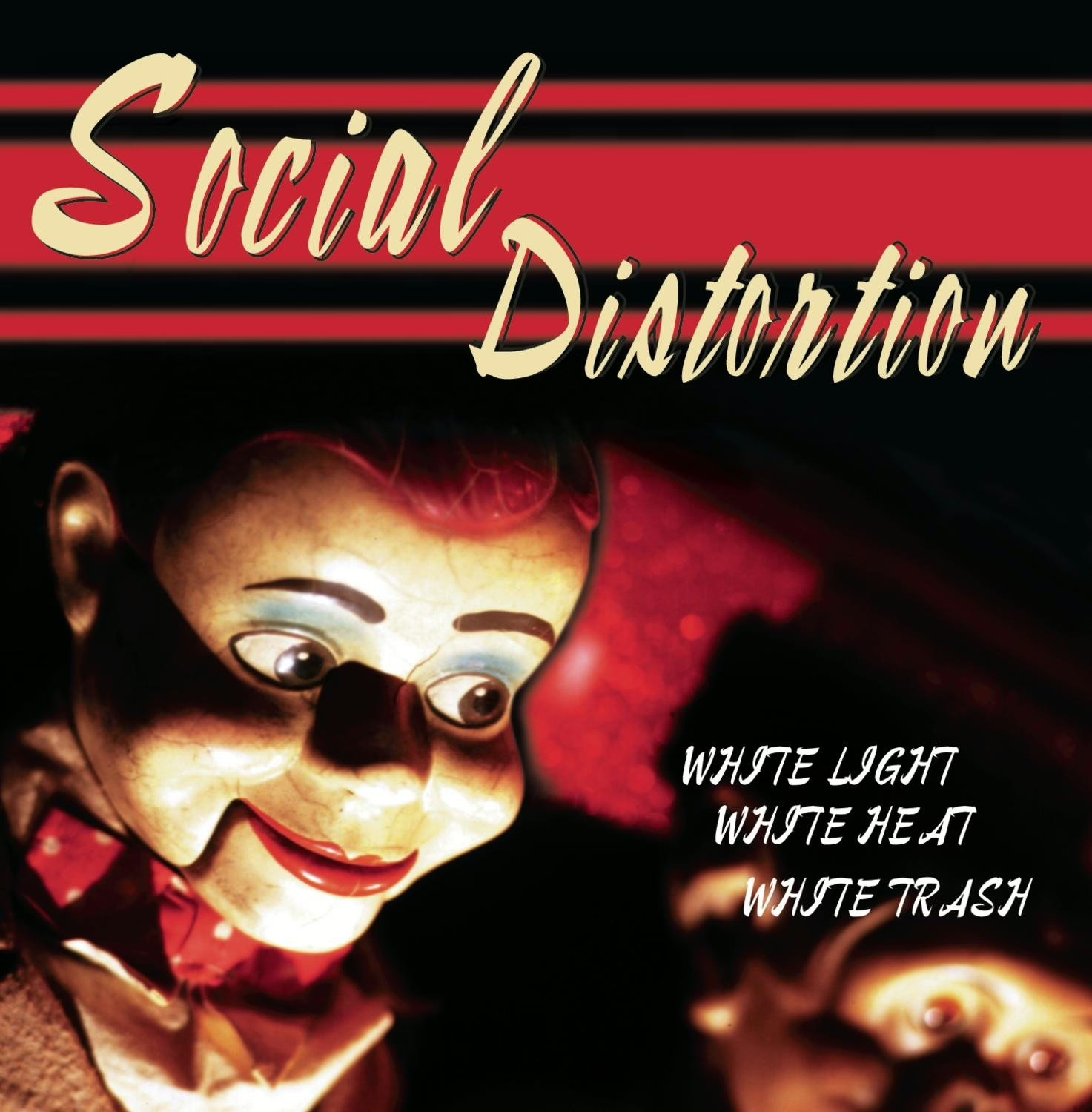
Darker, heavier, and more volatile than what came before, White Light, White Heat, White Trash finds Social Distortion digging into their bruised core. “I Was Wrong” remains one of Ness’s most personal and vulnerable songs, while “When the Angels Sing” and “Don’t Drag Me Down” balance melody with aggression. The guitars hit harder, the rhythms feel urgent, and there is a rawness that cuts through any polish. It is not their most consistent record front to back, but when it lands it lands with force. Redemption stories only matter if the struggle feels real — and this one does.
Key Track: “I Was Wrong” — A brutally honest confession wrapped in ringing guitars and one of Ness’s strongest vocal performances.
A bruised and confrontational record that turns turmoil into some of their most powerful moments.
3. Mommy’s Little Monster (1983)
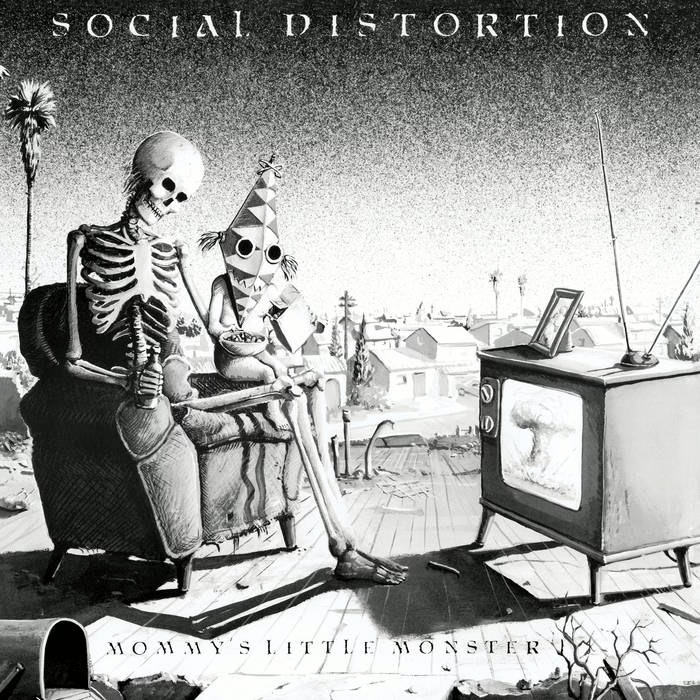
The debut that introduced Social Distortion to the world is fast, raw, and unapologetic. Mommy’s Little Monster sits squarely in early Southern California hardcore, but even here you can hear the seeds of something bigger. The title track remains an anthem of alienation and rebellion, and songs like “Another State of Mind” capture restless youth with sharp edges and zero compromise. The production is rough, the tempos are relentless, and the attitude is unmistakable. It is a snapshot of a band still forming its identity but already brimming with swagger. While later records would broaden their range, this debut remains essential for its urgency and authenticity.
Key Track: “Another State of Mind” — A restless, driving track that captures the frustration and ambition of a band ready to explode.
A blistering debut that planted the flag for everything that followed.
2. Social Distortion (1990)
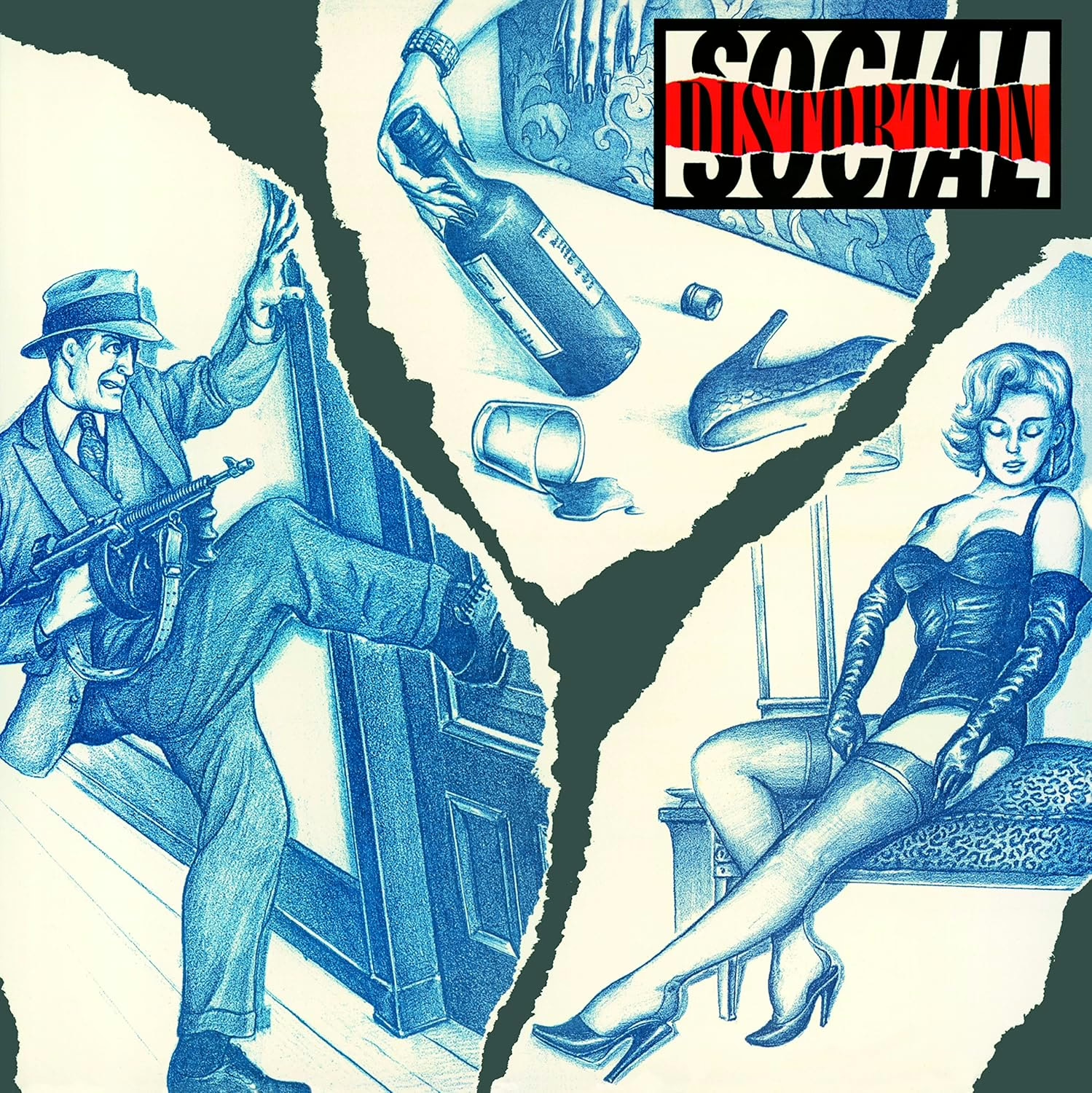
The self-titled album is where everything locked into place. The punk roots remained intact, but the songwriting matured, and the band’s roots and classic rock influences rose to the surface with confidence. “Ball and Chain” and “Story of My Life” are cornerstone tracks that expanded their audience without diluting their identity. There is a clarity here that feels earned — a balance between grit and melody that few of their contemporaries achieved. The production is cleaner, the hooks are stronger, and Ness sounds like a frontman who has survived enough to sing with real authority. This is the record that transformed Social Distortion from cult survivors into enduring American storytellers.
Key Track: “Ball and Chain” — A slow-building roots rocker that pairs heartland melancholy with punk resolve.
The breakthrough album that fused punk attitude with American roots into something timeless.
1. Somewhere Between Heaven and Hell (1992)
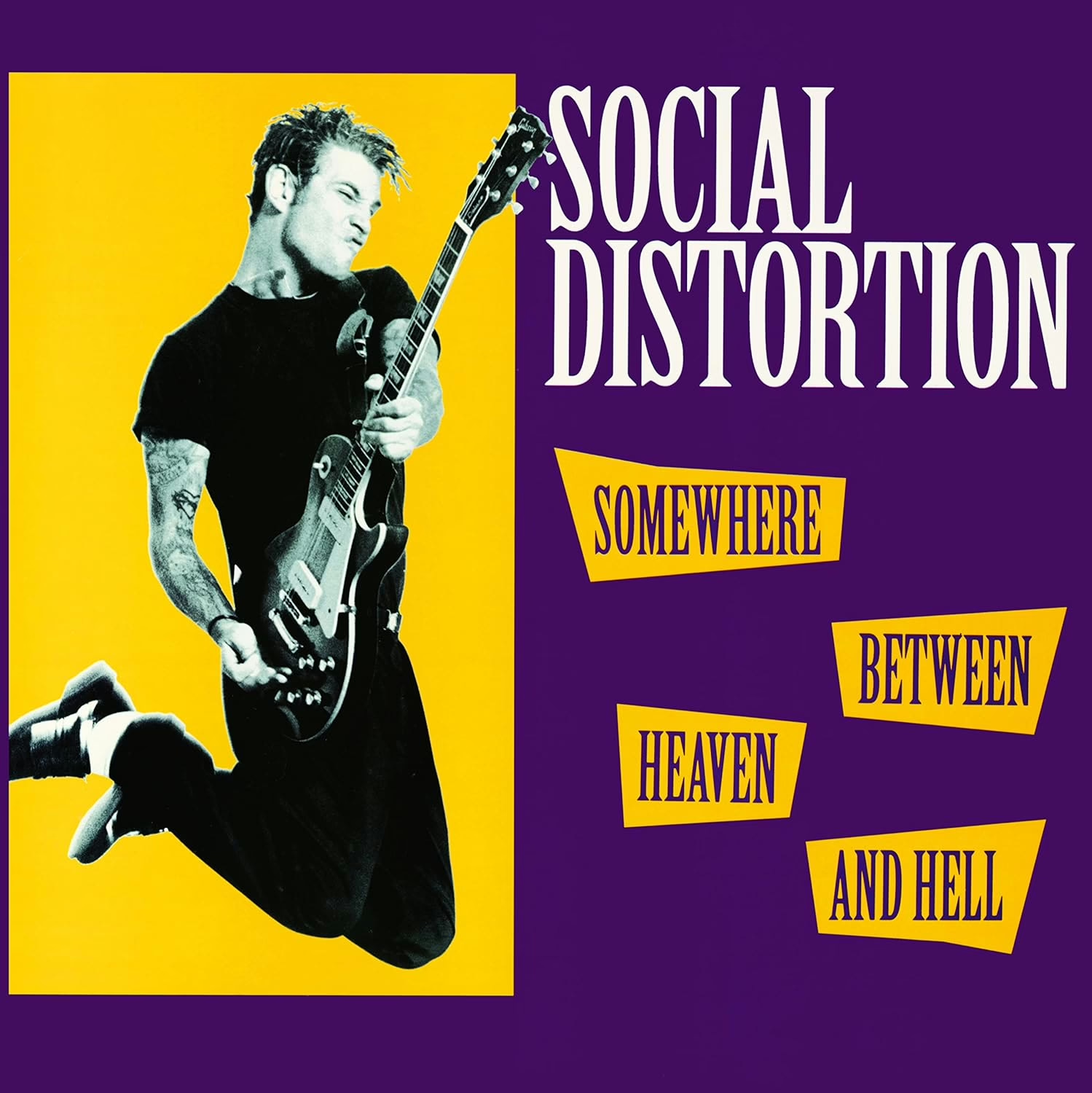
At number one sits the record that perfects their formula. Somewhere Between Heaven and Hell captures Social Distortion at their most complete. The songwriting is sharp, the hooks are undeniable, and the blend of punk drive and roots rock feels effortless rather than calculated. “Bad Luck,” “Cold Feelings,” and “When She Begins” are among the band’s strongest tracks, each balancing toughness with vulnerability. There is extreme attitude here, but also restraint. The production is tight without feeling slick, and the pacing never drags. This album defines their identity which each and every hard hitting track. It feels confident, focused, and built to last. This is a timeless album that is a perfect pick up and play at any given moment in the day!
Key Track: “Bad Luck” — A punchy, riff-driven anthem that distills the band’s outlaw cool into four minutes of pure momentum.
The definitive statement where punk grit and roots rock storytelling finally meet in perfect balance.
Final Groove
Social Distortion never chased the bright lights. They consistently refined who they were and didn’t care who was paying attention. From the frantic urgency of Mommy’s Little Monster to the fully realized blend of grit and melody on Somewhere Between Heaven and Hell, the band carved out a lane that few others could occupy. Punk bands softened. Rock bands faded. Social Distortion endured.
At the center of it all is Mike Ness, whose voice has aged into something even more convincing. His songwriting shifted from youthful defiance to hard-earned reflection without losing its backbone. That evolution is why these records still resonate decades later.
Now, with Born To Kill arriving in May as their first new studio album in fifteen years, the story continues. After health battles, long silences, and a shifting musical landscape, Social Distortion returns not as a nostalgia act but as lifers. If their past has taught us anything, it is this: grit survives. And sometimes it even grows stronger with time.
SOCIAL DISTORTION LINKS
Website | Facebook | Instagram

A lifelong fan of new music—spent the '90s working in a record store and producing alternative video shows. In the 2000s, that passion shifted online with blogging, diving headfirst into the indie scene and always on the lookout for the next great release. Still here, still listening, and still sharing the best of what’s new.
- Christopher Anthonyhttps://thefirenote.com/author/canthony/
- Christopher Anthonyhttps://thefirenote.com/author/canthony/
- Christopher Anthonyhttps://thefirenote.com/author/canthony/

- Christopher Anthonyhttps://thefirenote.com/author/canthony/