Amplified Vault: A Monthly Deep Dive into Iconic Albums & Artists
Amplified Vault takes a look at artists’ discographies, decoding what made them matter and how they continue to stay on our playlists today. For this installment, we step into the dimly lit world of Interpol, a band that helped define the early 2000s post punk revival with a sound that felt fresh and new but also like they have always been around. At a time when indie rock was attempting to shift to gain a bigger fanbase, Interpol leaned into a tension and created atmosphere that clearly made them stand out. Sharp guitars, locked-in bass rhythms, and a sense of cool detachment that never fully gave away its secrets, Interpol have always had swagger. From their career launching debut to a later era consistency, this decoding follows the Interpol evolution.
Amplified Vault: Decoding Interpol – Ranking Every Album
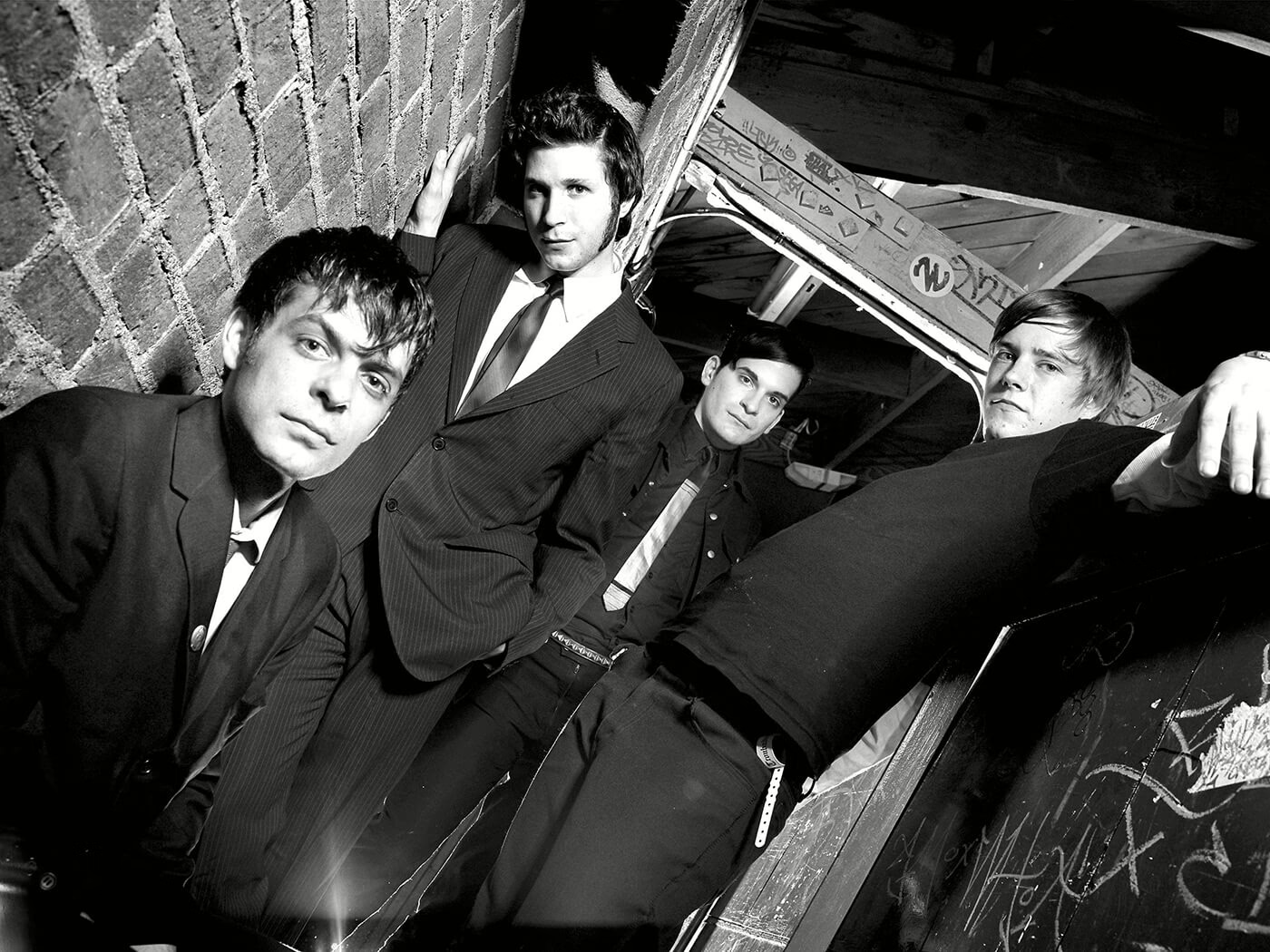
Shadow. Style. Precision.
Formed in New York City in the late 1990s, Interpol quickly became a new “it” band to know. Fronted by Paul Banks, whose baritone delivery became instantly recognizable is now a defining element of their sound. The group pulled from post punk legends like Joy Division while creating a more polished and modern edge sound. Their 2002 debut Turn On the Bright Lights arrived with immediate impact and as their career progressed, Interpol expanded their sound across larger stages and broader arrangements. Like any career type band, lineup changes, label changes and shifting production approaches pushed them in new directions. Through it all, the band has maintained a commitment to their sound, building a catalog that rewards both first listens and deep dives.
Bonus Entry: Live At Third Man Records (2024)
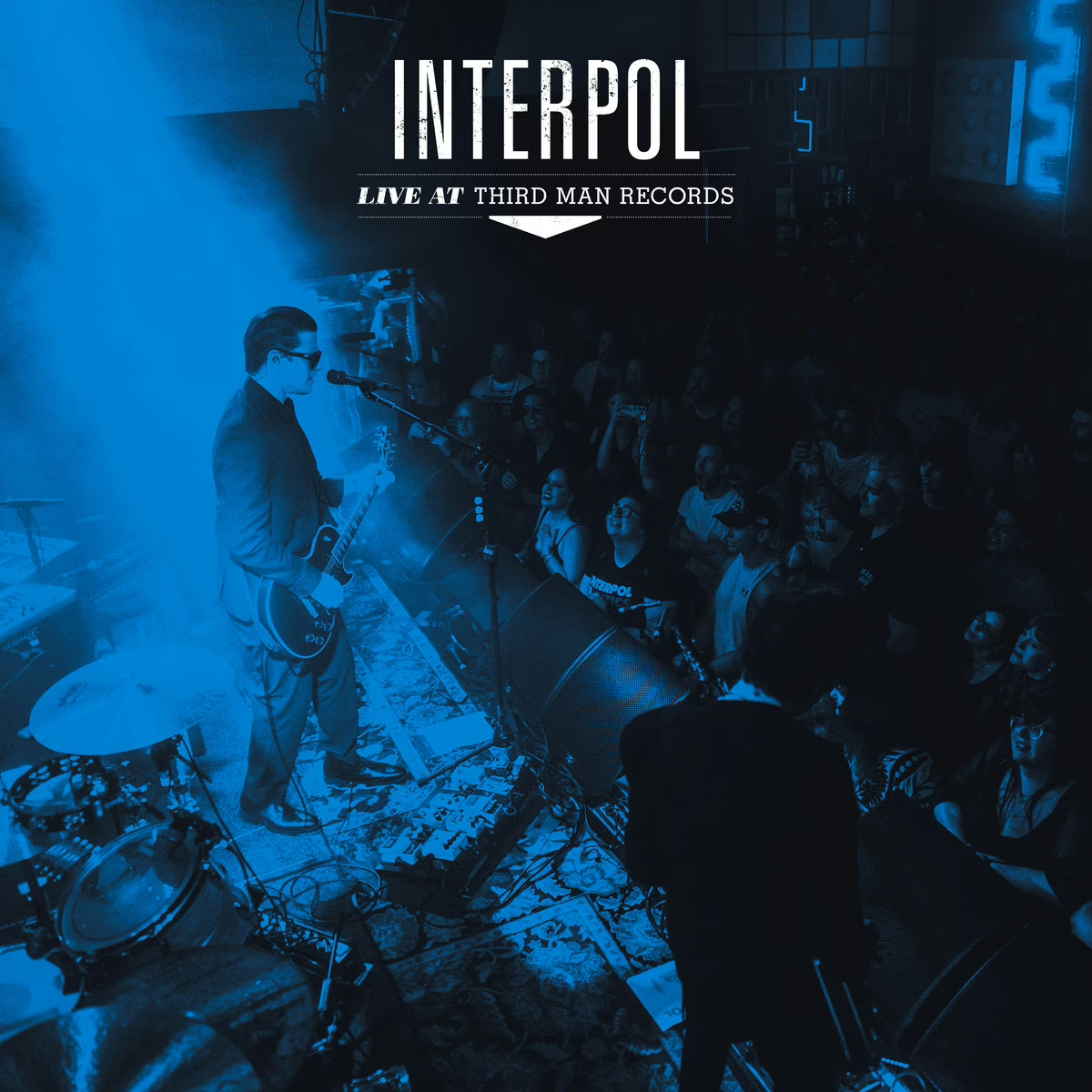
Recorded live in Nashville, Live at Third Man Records captures Interpol in a stripped, controlled setting that plays directly to their strengths. Without the scale of a festival stage or arena production, the band leans into the smaller space and crowd which lets each track breathe more in real time. As you might expect, the performance is still tight and controlled, with Paul Banks delivering vocals that feel more immediate than some of their studio work. Tracks here are from across their catalog which I like to see on any live record and is just another example of Interpol still holding their tension after all these years.
Key Track: “Not Even Jail” – A sharper, more urgent take that closes out the album and highlights the band’s ability to recreate tension without relying on studio layering.
A focused live snapshot that proves Interpol’s style and delivery holds up without studio polish.
7. Interpol (2010)
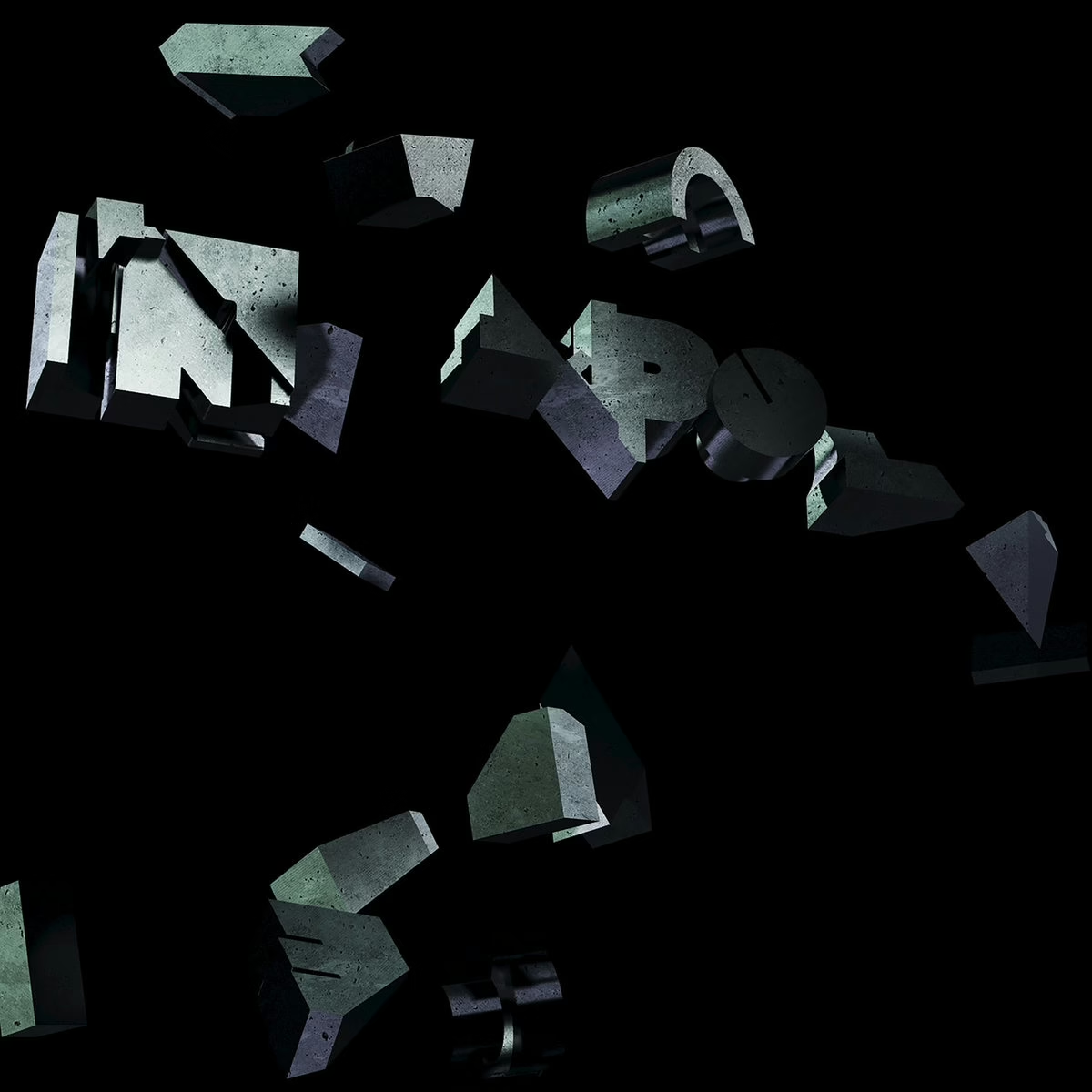
This was a pivotal record from Interpol with bassist Carlos Dengler leaving the band shortly after its release. Clearly there was an abundance of tension in the band and it impacted the overall flow of Interpol. It just doesn’t have the same zip that their other records contain and really more emotionally shut down. The band choose this somber mood over momentum, with songs that drift rather than drive. There are flashes of the Interpol that made them famous but it one of their only records where the 10 tracks don’t connect. Funny thing is I can still put this album on and let the needle play but after 16 years you can hear the band searching for direction.
Key Track: “Lights” – A slow building, brooding centerpiece that captures the band’s atmospheric strengths at their best.
A moody but uneven transitional record that struggles to find cohesion.
6. Our Love To Admire (2007)
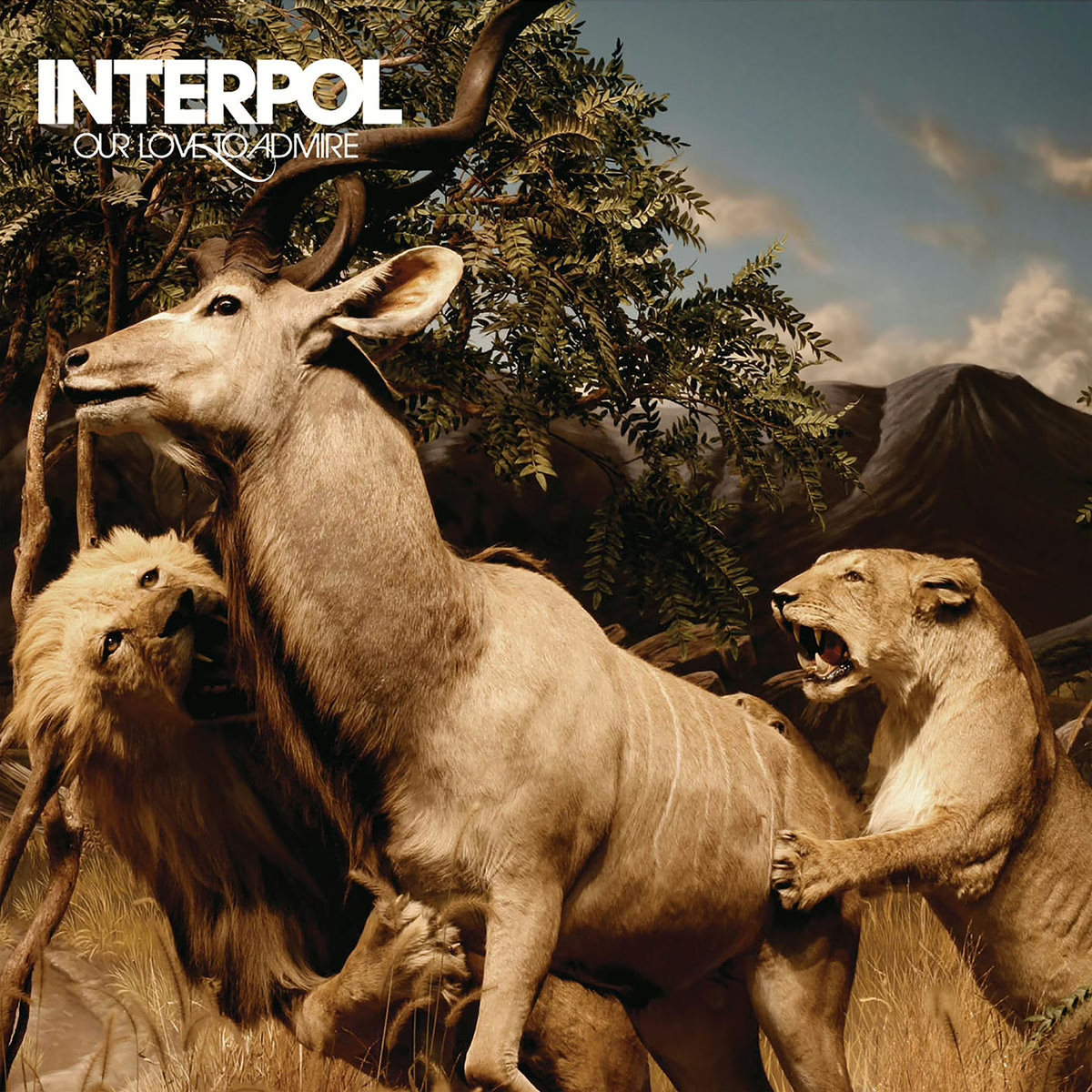
Interpol’s third album is their biggest and most ambitious as it pushed their sound into a bigger space. Our Love to Admire also found the band signing with major label Capitol Records which for some successful indie bands can be a death sentence. Interpol is too good of a band to let that impact them but the pressure to be a “hit” is hard to ignore with a major. Songs like “The Heinrich Maneuver” and “No I in Threesome” do showcase sharper hooks and at its best, the album feels expansive and confident. At its weakest, it drifted into excess, losing some of that tight control that defined their earlier work. It was an important step in their evolution, but could have probably been a better overall record with less pressure.
Key Track: “The Heinrich Maneuver” – A punchy, direct track that proves the band could scale up without losing their bite.
A bold and expansive record that trades precision for ambition.
5. The Other Side Of Make-Believe (2022)
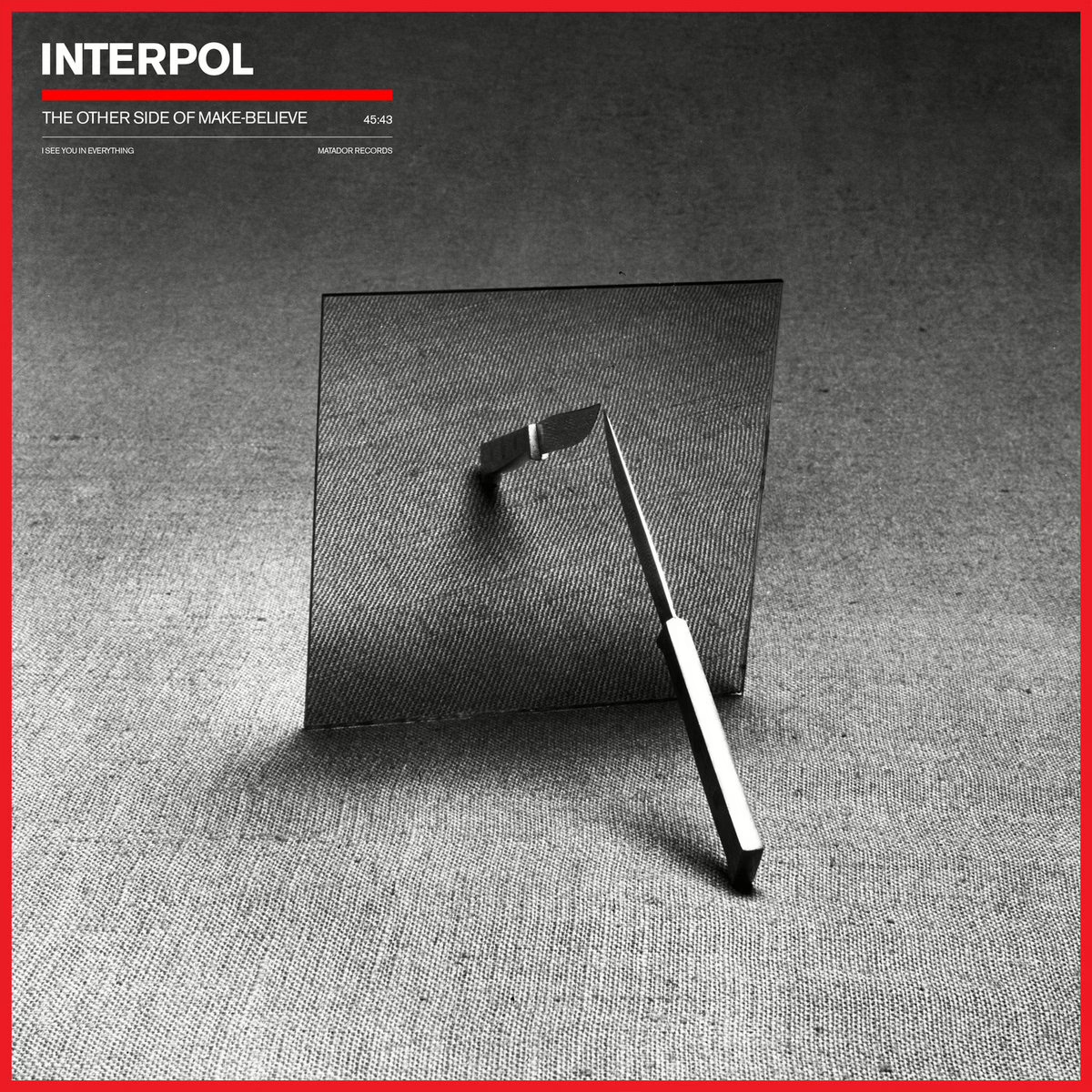
Late era Interpol finds the band where you might expect them at this point. Atmosphere over urgency is what you will hear on The Other Side of Make-Believe as they delivered an album that longtime fans could sit with while still catching the ears of a wider indie scene. Produced by Flood and Alan Moulder, the album leans into texture, patience, and restraint. There is a quiet confidence here, with songs unfolding gradually rather than striking immediately. Tracks like “Toni” and “Something Changed” show that band has not lost the ability to create emotional weight without overplaying their hand. The guitars shimmer which is an Interpol staple, and Paul Banks delivers one of his more reflective vocal performances. While it does not have the sharp edge of their earlier records, it shines with their now veteran status confidence.
Key Track: “Toni” – A smooth, hypnotic opener that sets the tone with elegance and restraint.
A restrained and reflective record that favors atmosphere over immediacy.
Interpol Essentials: Deep Cuts & Hidden Gems
Beyond the singles and signature tracks, these songs highlight Interpol’s depth, control, and ability to build tension in unexpected ways.
“Leif Erikson” – Turn On the Bright Lights
A slow, haunting closer that lingers long after it ends, capturing the band’s gift for restraint and emotional distance.
“A Time to Be So Small” – Antics
A fan favorite that closes the album, drifting between fragility and tension before it finally lets go, and proof their deep cuts carried as much weight as the singles.
“Public Pervert” – Antics
Dark, hypnotic, and rhythm driven, this track builds atmosphere without ever breaking its cool surface.
“The Scale” – Our Love to Admire
One of the album’s most underrated moments, balancing elegance and urgency with a steady, pulsing drive.
“Success” – Interpol
A brooding opener that sets a heavy tone, showing the band leaning deeper into mood and repetition.
“My Blue Supreme” – El Pintor
A shimmering, mid tempo standout that highlights the band’s renewed focus and melodic strength.
“Stay in Touch” – Marauder
A slow burn that stretches tension across its almost 5-minute runtime, one of the album’s most immersive tracks where the background rhythms steal the show.
“Passenger” – The Other Side of Make-Believe
A subtle, reflective cut that leans into patience, rewarding repeat listens.
“Direction” – Six Feet Under, Vol. 2: Everything Ends (Soundtrack)
A non-album gem from 2005 that captures early Interpol at their most cinematic and worked well for a show with a similar undertone.
4. Marauder (2018)
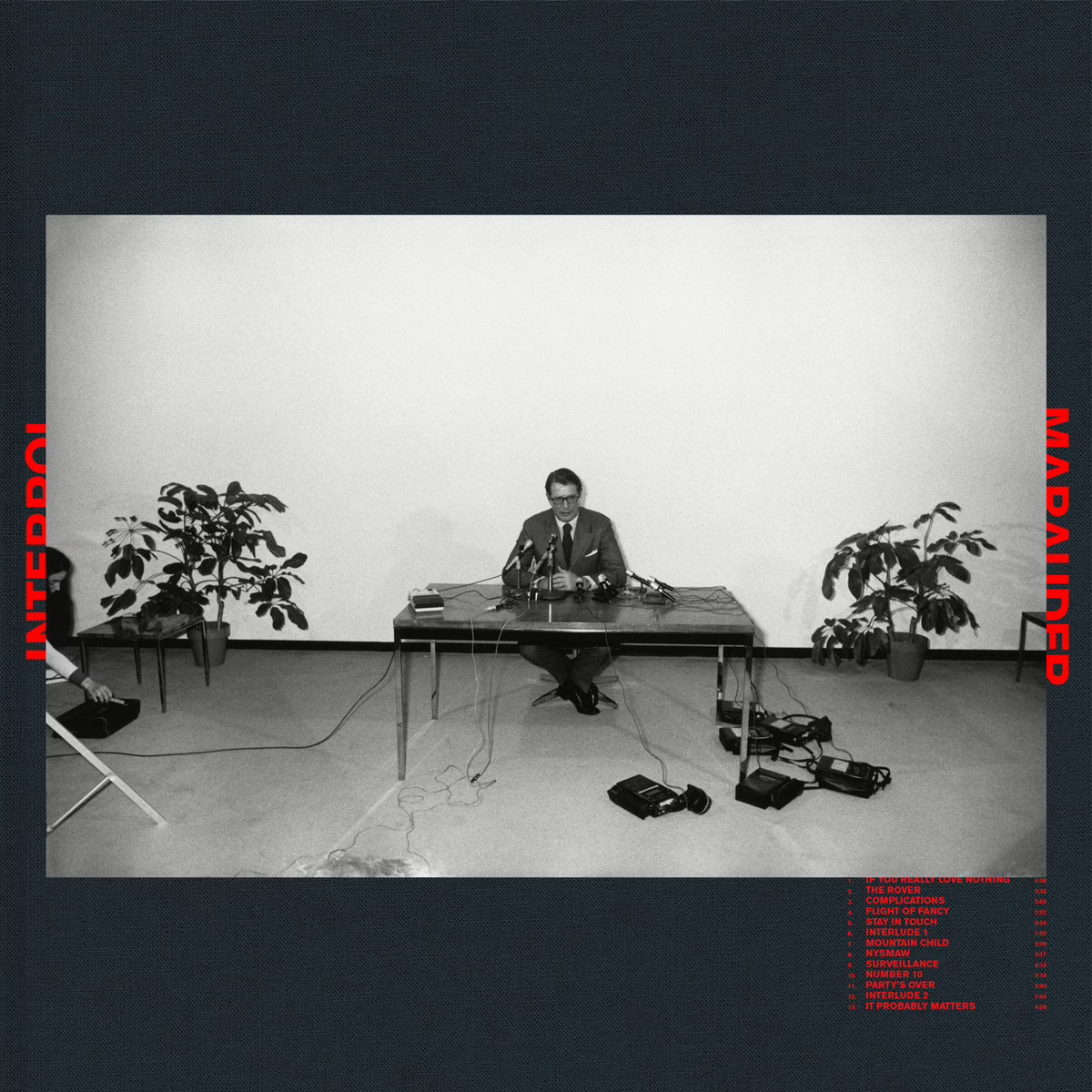
Marauder is a record that just keeps getting better with age. The band intentionally roughed up their sound and with producer Dave Fridmann, the album feels more immediate, with a looser, almost live energy that bubbles out of every riff. Paul Banks sounds more urgent than he has in years especailly on tracks like “The Rover” and “If You Really Love Nothing” which bring back a sense of drive, while still maintaining the band’s signature cool. The production is divisive, with a grit that sometimes muddies the Interpol type of clarity we have come to expect, but it adds character and unpredictability. It may not be their most polished effort, but it is one of their most alive.
Key Track: “The Rover” – A driving, confident track that reintroduces the band’s sense of urgency and momentum.
A raw and energized record that trades polish for immediacy.
3. El Pintor (2014)
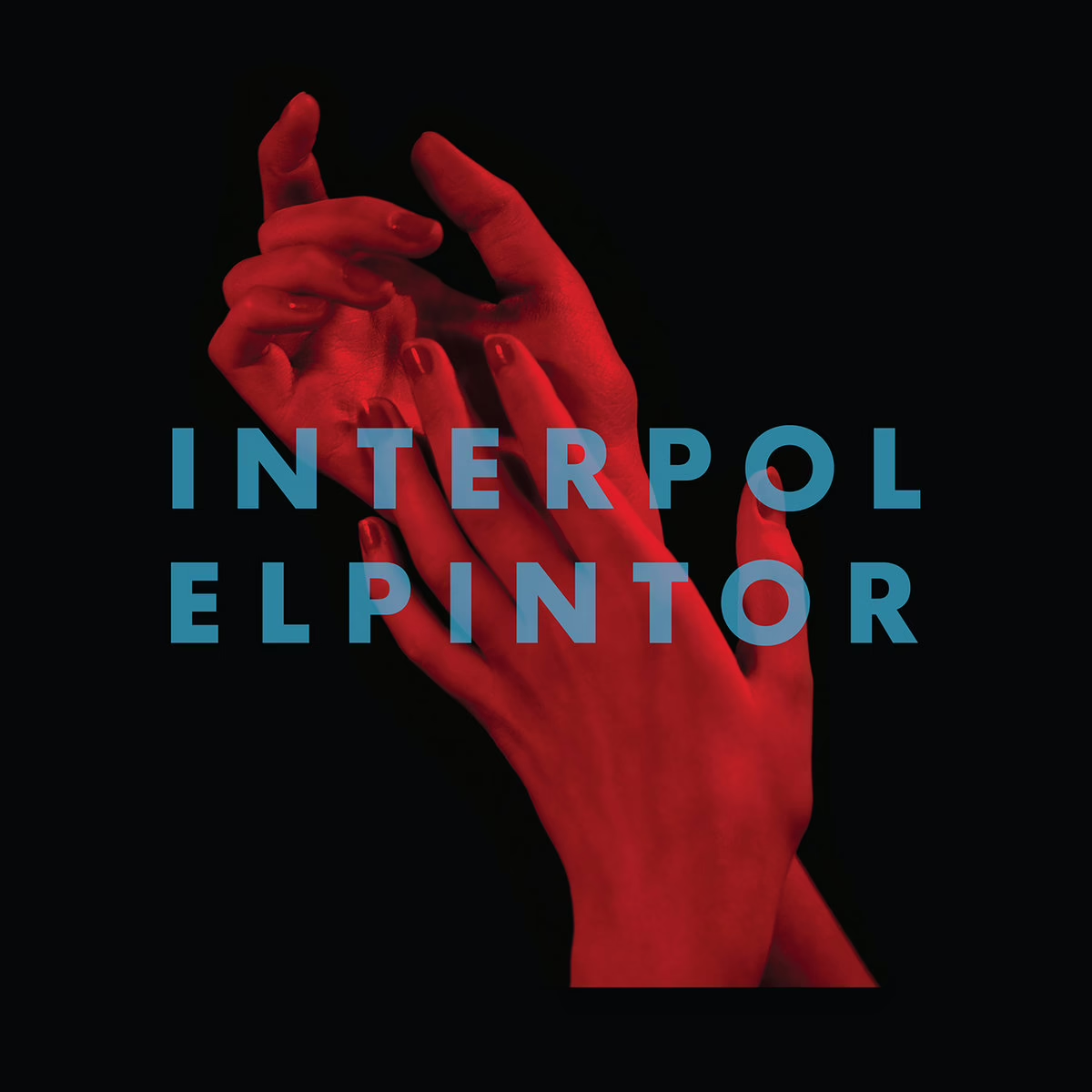
Coming four years off of their self titled record, El Pintor feels like a reset. Lean, focused, and confident, the album brings Interpol back to their core strengths which feels like an instant win right from Paul’s opening vocals on “All The Rage Back Home.” The absence of Dengler shifted the dynamic and at the time was a focus for critics, but Daniel Kessler’s guitar work and Sam Fogarino’s drumming step forward with purpose. The entire album recaptures the band’s sense of tension and release, which is a result of better dynamics within their inner circle. Every track feels intentional, and every moment is controlled which is exactly the Interpol I want to hear!
Key Track: “All The Rage Back Home” – A surging, melodic standout that blends nostalgia with renewed focus.
A sharp and focused comeback that reestablishes the band’s identity.
2. Antics (2004)

The sophomore slump is a real thing in music so Antics was released to a higher scurrility. Could Interpol continue what they started? Well, Antics delivered as the songwriting is just as tight, the hooks soar, and the band sounds more comfortable then they probably should still being a relatively new band at the time. “Evil,” “Slow Hands,” and “C’mere” remain some of their most recognizable tracks and the album never loses the tension that is a highlight in their sound. This is Interpol all the way through and for some fans this is their peak, and could be argued taking the top spot on this list. It is easy to hear why and it was close because this record is still really really good!
Key Track: “Evil” – A sleek track that has you humming “Rosemary” before it even begins. The song also delivers one of the band’s most infectious hooks.
A tight follow up that rivals their best record and has a fantastic balance of mood and melody.
1. Turn On The Bright Lights (2002)
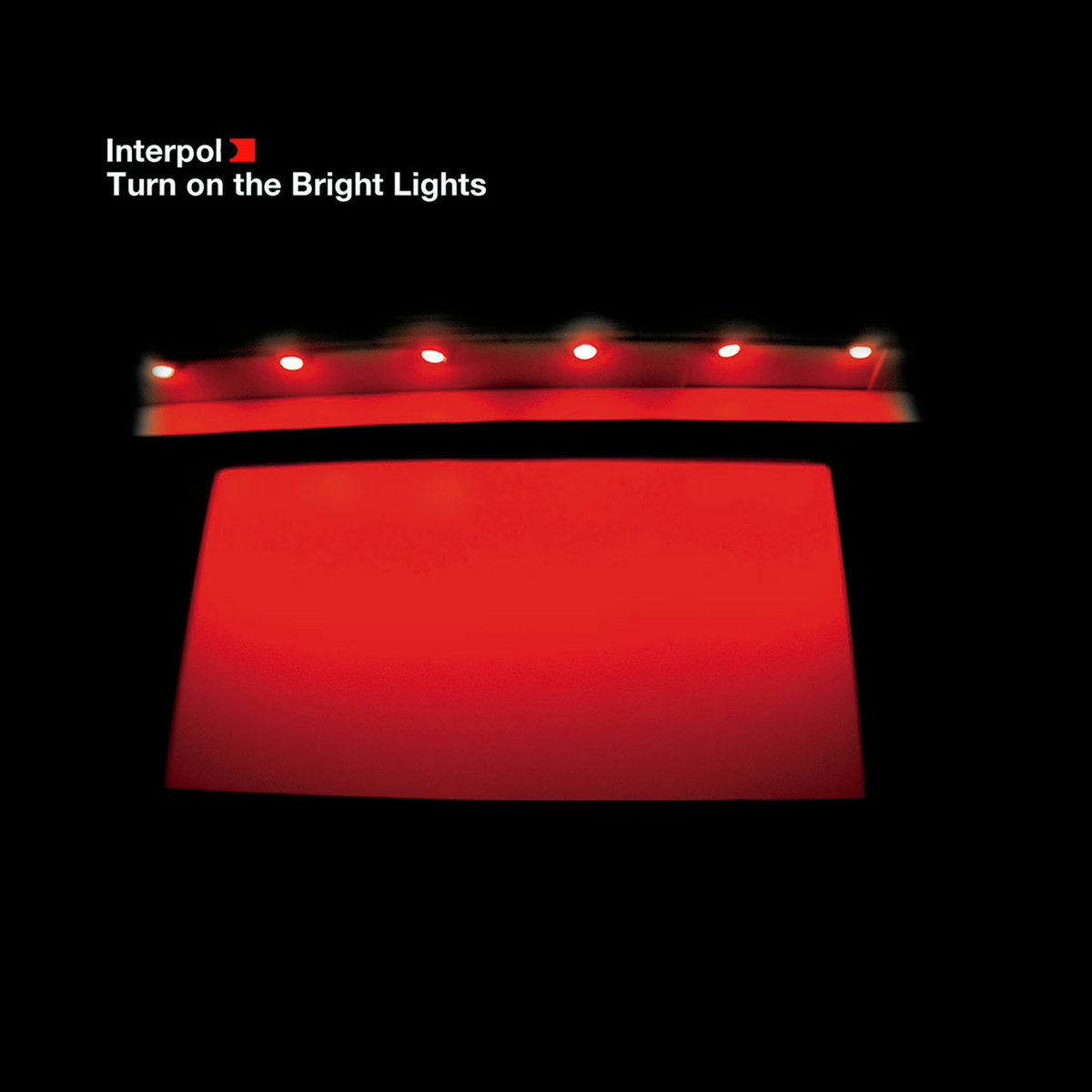
Taking the top spot is a debut that still defines the band. Turn On the Bright Lights arrived with a cool as hell vibe from a NYC band which was somewhat cold, precise and had an overwhelming striking confidence. The interplay between Daniel Kessler’s sharp guitar lines, Sam Fogarino’s locked-in drumming, and Carlos Dengler’s melodic bass work creates a tension that rarely lets up. Paul Banks delivered lyrics with a straight face and all business that feel detached yet run deep adding to the album’s timeless quality. Tracks like “Obstacle 1,” “PDA,” and “Leif Erikson” remain essential listening. There is no wasted space here. It is not just their best album, I think it is one of the defining records of its era.
Key Track: “PDA” – A slow burning track that builds an intense tension and absolutely captures everything that makes Interpol great.
A defining debut that set the standard for a post punk revival and still holds up today.
Final Groove
Interpol defined a sound early and has spent the next two decades refining it. From the killer precision of their debut, Turn On the Bright Lights, to the sharper, more focused return on El Pintor and up to their last record, the band has remained committed to keeping things on a very Interpol level. While several others from their era that still exist have tried to change some things up or simply faded out, Interpol has stayed the course. Their catalog is built on consistency and identity and is proof you do not need to have dramatic switches in sound to stay relevant.
Paul Banks, remains a vocal force that has consistently delivered an emotional weight that is hard to match. Around him, the band operates more like a machine with rhythm and space that just gets into your head and stays. Even now, Interpol feels timeless. Not because they changed anything, they have never needed to.

A lifelong fan of new music—spent the '90s working in a record store and producing alternative video shows. In the 2000s, that passion shifted online with blogging, diving headfirst into the indie scene and always on the lookout for the next great release. Still here, still listening, and still sharing the best of what’s new.
- Christopher Anthonyhttps://thefirenote.com/author/canthony/
- Christopher Anthonyhttps://thefirenote.com/author/canthony/
- Christopher Anthonyhttps://thefirenote.com/author/canthony/

- Christopher Anthonyhttps://thefirenote.com/author/canthony/