Amplified Vault: A Monthly Deep Dive into Iconic Albums & Artists
Each month in Amplified Vault, we dive deep into an iconic artist’s catalog—ranking albums, highlighting turning points, and spotlighting essential tracks. This edition celebrates Spoon, the Austin-based band that turned smart restraint and tight songwriting into an art form. Over nearly three decades, they’ve managed to sound both timeless and forward-thinking, delivering some of the sharpest records in indie rock. Whether dialing into wiry punk or shimmering soul, Spoon never stopped refining their sound.
Amplified Vault: Decoding Spoon – Ranking Every Album
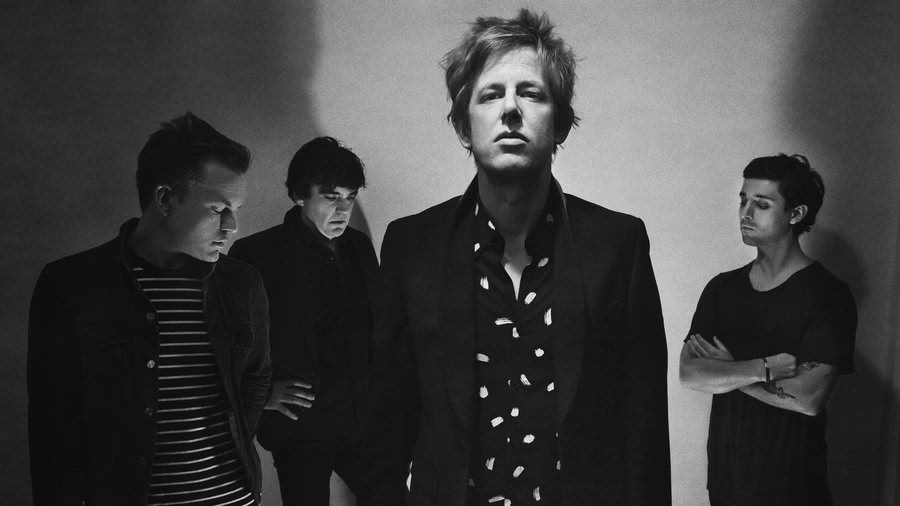
Art-rock architects. Razor-sharp minimalists. Indie’s most reliable shapeshifters.
Spoon emerged from Austin in the early ’90s, led by singer/guitarist Britt Daniel and drummer/producer Jim Eno. Their early output, while raw and angular, hinted at the precision and punch that would define them. After a brief brush with major-label mishandling, the band regrouped and gradually became one of the most consistent forces in indie music. Known for their minimal-yet-muscular arrangements, offbeat production choices, and Daniel’s ragged vocal charm, Spoon carved a lane that somehow felt experimental and radio-ready at once. With a discography that rarely misfires, they’ve earned their reputation as masters of control, groove, and impeccable taste.
Bonus Entry: Soft Effects EP (1997)
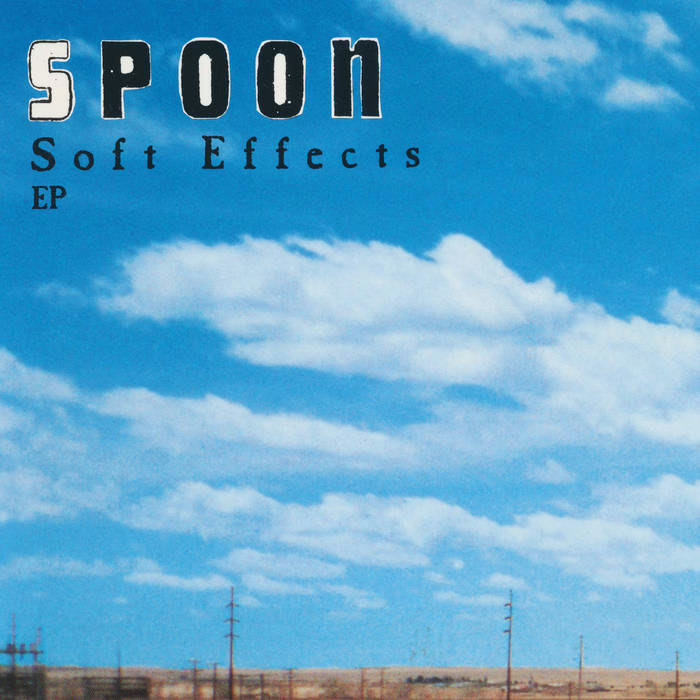
Following Telephono, this 5-song EP marked a dramatic shift. Gone was the loud aggression—Soft Effects introduced atmosphere, restraint, and patience. Tracks like “Mountain to Sound” and “Waiting for the Kid to Come Out” showed a band growing into their skin, exploring negative space and slower tempos. It’s the first glimpse of the refined, controlled Spoon that would emerge on Girls Can Tell and beyond. Essential for fans interested in their evolution, it’s a short but crucial bridge between two distinct eras.
Key Track: “Mountain to Sound” – Angular, brooding, and deceptively melodic. Early proof of Spoon’s command of dynamics.
A transitional EP that paved the way from punk outbursts to poised minimalism.
10. Telephono (1996)
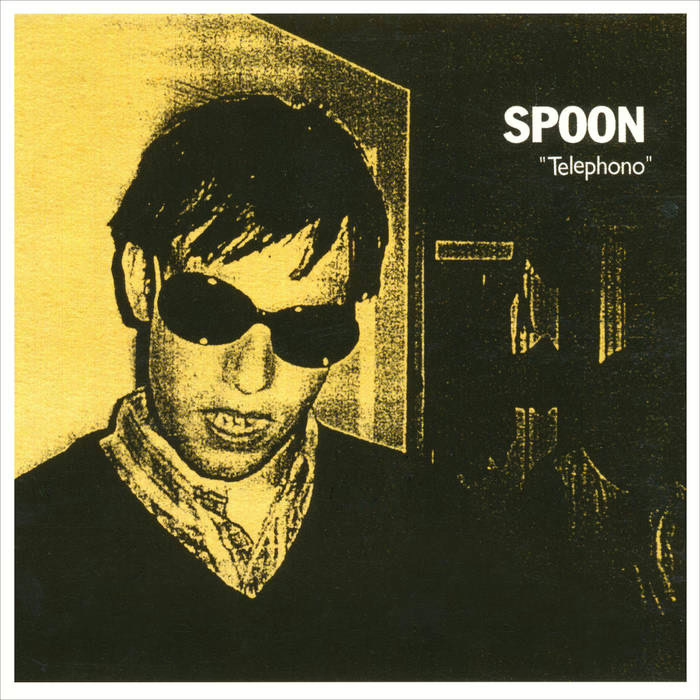
Their debut, and easily their rawest—Telephono is full of Pixies-esque shrieks, trebly guitars, and shouted charm. It’s lo-fi and noisy, powered more by energy than finesse. “Not Turning Off” and “Nefarious” still rip, and you can hear the seeds of what Spoon would later refine. But it’s very much a scrappy first effort—appealing in its DIY intensity but light on the sophistication they’d soon develop. Fans of indie’s punkier side will find plenty to turn up here, but it’s more historical curiosity than essential listen. Fans that were their from the beginning of Spoon when this album released in 1996 still have a special place for several of these tracks.
Key Track: “All the Negatives Have Been Destroyed” – The best distillation of early Spoon’s angular attack—loud, bratty, and loaded with raw energy that hinted at better things to come.
A scrappy debut overflowing with energy, if not yet identity.
9. Transference (2010)
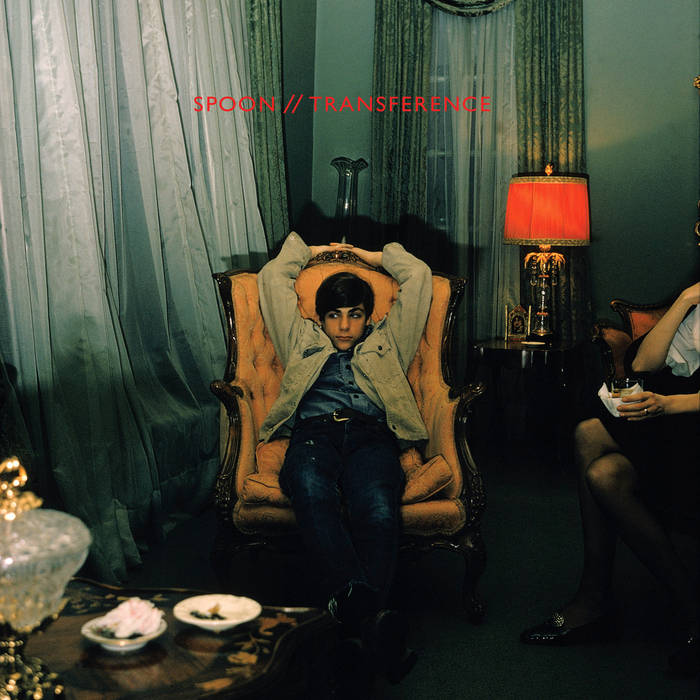
Transference is Spoon at their most cryptic—deliberately raw, full of cut-and-paste edits, and cloaked in emotional distance. Some fans bounced off its stripped-down sound, but there’s magic in its moodiness. “Got Nuffin” pulses with menace, “The Mystery Zone” stretches time and space, and “Written in Reverse” sounds like a nervous breakdown set to piano. It’s a colder, more cerebral album—one that thrives on negative space and tension. Not as immediately satisfying as its neighbors, but still a bold move for a band with nothing to prove. It is one record that some fans would push to the top tier of this ranking as it truly is a different record.
Key Track: “Written in Reverse” – Raw vocals, jagged piano, and catharsis—ugly-beautiful in all the right ways.
A stark, anxious, and purposefully fragmented album that reveals itself slowly.
8. Hot Thoughts (2017)
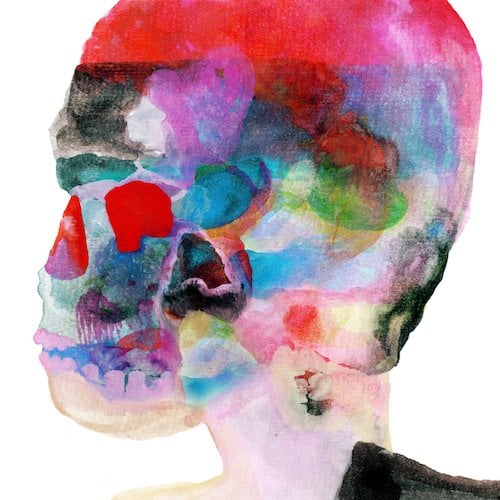
Here’s Spoon at their most electronic and dancefloor-friendly. Hot Thoughts leans into synths, grooves, and spacey textures, with tracks like the title cut and “Can I Sit Next to You” channeling Bowie and LCD Soundsystem. Produced with longtime collaborator Dave Fridmann, it’s bold and polished—though sometimes at the expense of immediacy. “I Ain’t the One” is a shimmering standout, and the instrumental closer “Us” shows off a cinematic streak. It’s not their warmest record, but it’s sleek and fascinating—proving the band was still eager to push boundaries this late in their run.
Key Track: “Can I Sit Next to You” – Funky, flirty, and slinking across neon floors—Daniel at his most swaggering.
A shimmering detour into art-funk and synth-pop that rewards repeated listens.
7. A Series of Sneaks (1998)
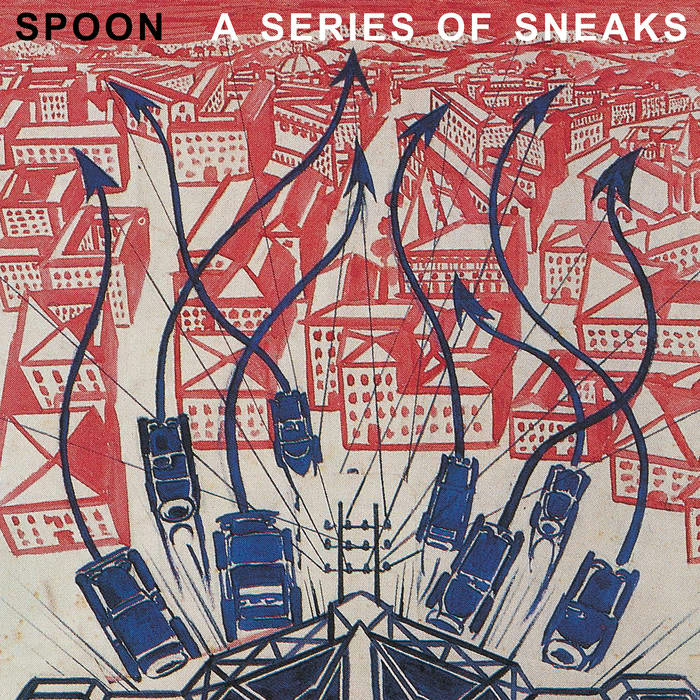
This is Spoon’s brash, twitchy second album—jittery and weird and overstuffed with ideas. It was the band’s introduction to the major labels as Elektra really didn’t know what to do with them after releasing this album. Songs are short, sharp, and sometimes abrasive, evoking the wiry post-punk of Wire or The Fall. “Car Radio” and “Metal Detektor” show glimpses of the melody-first band they’d become, but mostly this is raw ambition in motion. Lyrically cryptic and rhythmically propulsive, A Series of Sneaks is a fan favorite for a reason as it’s full of energy, angst, and promise. Spoon would later disown some of its rough edges, but without this step, there’s no Girls Can Tell. A fascinating, underrated pivot.
Key Track: “Car Radio” – Unrelenting and twitchy, the song captures the album’s nervous pulse and late-‘90s urgency.
A frenetic post-punk blast—scrappy, twitchy, and full of potential.
6. Lucifer on the Sofa (2022)
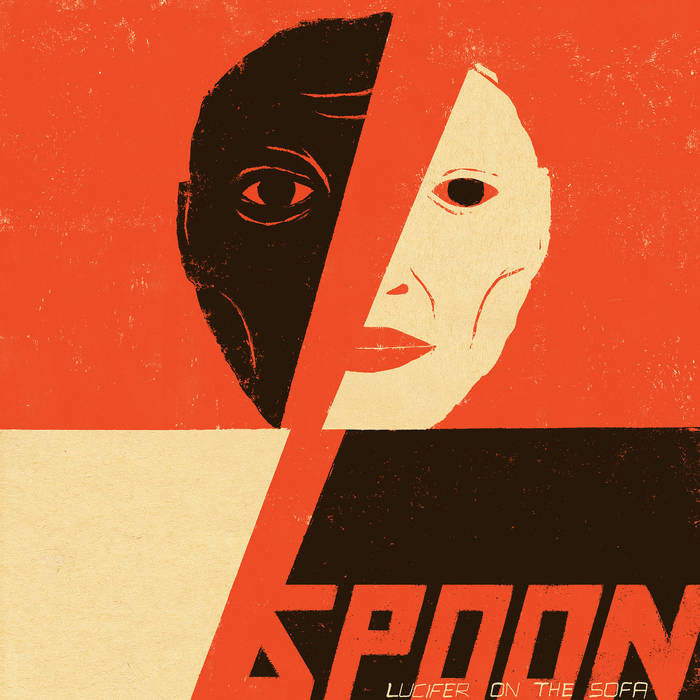
Spoon’s latest is their most traditional rock record in years—and it absolutely rips. Lucifer on the Sofa trades experimentation for groove-forward guitar rock, embracing a more live-band energy that feels urgent and raw. Opener “Held” growls with menace, “The Hardest Cut” delivers a bluesy gut-punch, and “My Babe” balances tenderness with swagger. Britt Daniel sounds reinvigorated throughout, and the production (helmed in part by Mark Rankin) gives the record muscle without losing clarity. It’s not a reinvention as it’s a reaffirmation of what makes Spoon great. More than 25 years in, they’ve still got it.
Key Track: “The Hardest Cut” – A ZZ Top-infused ripper that puts raw riffs and Texas sweat front and center.
A fiery, guitar-driven return to basics that proves Spoon’s power hasn’t faded.
Spoon Essentials: Deep Cuts & Hidden Gems
Rare tracks, overlooked gems, and non-album cuts that show Spoon’s full range.
“Chateau Blues” – 2025 single
A soulful, mid-tempo groover that blends Spoon’s signature restraint with smoldering atmosphere.
“TV Set” – TV Set 10″
A fuzzed-out cover of The Cramps rocker with a haunting groove, it’s a great track that was featured in the reboot Poltergeist movie and released on 10″ for RSD 2015.
“Text Later” – Split 7” with Swearing at Motorists
A short, jangly gem that balances heartbreak and humor—classic Spoon brevity.
“The Book I Write” – Stranger than Fiction Soundtrack
A driving track that could’ve slotted onto *Gimme Fiction*—tight and addictive.
“Operation In Progress” – Various: Rock and Roll Free-for-All Vol. 2
Another raw and fuzzed early track that never made a studio record but the classic Spoon sound is there!
“Shake It Off” – No Bullets Spent 7″
A funky, standout track from the A Series of Sneaks era, found on the No Bullets Spent 7″ and later released digitally in 2019.
“Advance Cassette” – A Series of Sneaks
A lost favorite from the twitchy second album that predicted their fondness for groove.
5. Gimme Fiction (2005)
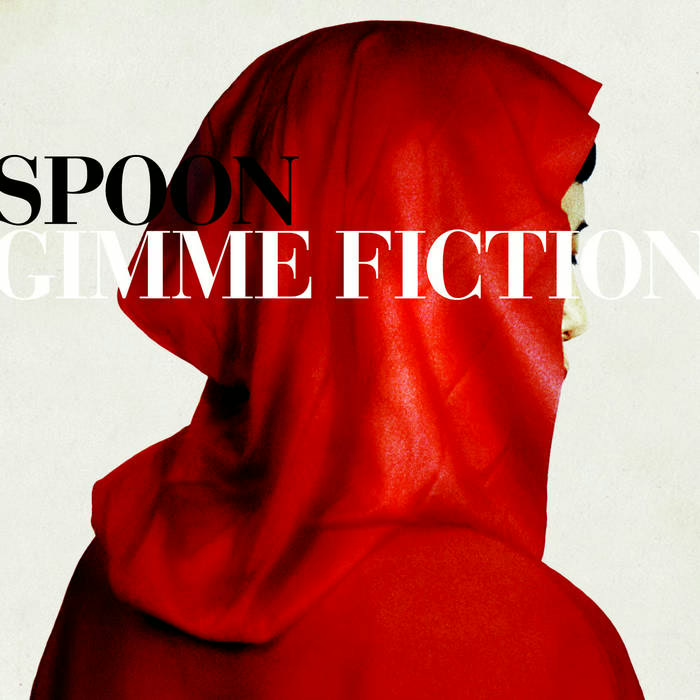
Released between two of their most iconic albums, Gimme Fiction captures Spoon in evolution. The hit “I Turn My Camera On” still slinks with Prince-like cool, but the album digs into shadows: “The Beast and Dragon, Adored” opens things with stately drama, while “My Mathematical Mind” simmers with abstract intensity. Elsewhere, piano ballads (“I Summon You”) and odd grooves (“Was It You?”) show a band willing to pull apart their formula. It’s a transitional album in the best sense. It is less punchy, more moody, and full of ideas that would shape the next decade of their sound.
Key Track: “I Turn My Camera On” – Prince-influenced falsetto over a taut rhythm—sleek, sexy, and totally unexpected from Spoon at the time.
A moody, inventive album that stretches Spoon’s formula in daring directions.
4. They Want My Soul (2014)

Coming off a brief hiatus, Spoon returned with something fierce and otherworldly. They Want My Soul blends sharp songwriting with lush, sometimes ghostly production. It’s one of their most texturally rich album. Floating between acoustic beauty (“Inside Out”), noisy stomp (“Rent I Pay”), and psych-pop weirdness (“Knock Knock Knock”). Working with Dave Fridmann added shimmer and bite, while the band sounded refreshed and locked in. It’s Spoon at their most dynamic and really showcases a veteran status as They Want My Soul is urgent but dreamy, classic but unpredictable. Even deep cuts like “Let Me Be Mine” and “Outlier” add to the sense that this was more than a comeback. It was a reinvigoration.
Key Track: “Inside Out” – Hypnotic and airy, it’s an unexpected Spoon classic driven by synths, not guitars.
A triumphant return that pushed Spoon into dreamier, more expansive territory.
3. Girls Can Tell (2001)
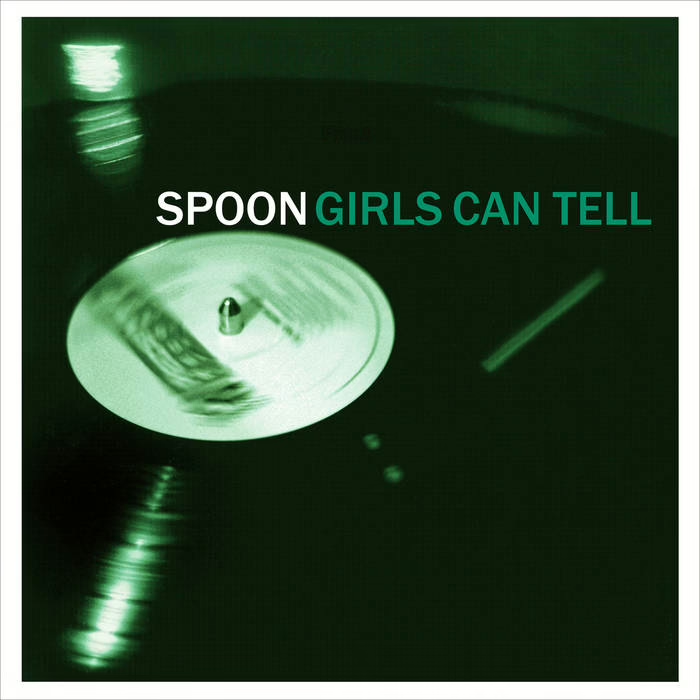
Girls Can Tell was the band’s creative reset—a post-major-label reinvention that leaned into classic pop, vintage rock, and lyrical nuance. The rough edges of their early records gave way to tighter songwriting and newfound poise. “Everything Hits at Once” sets the tone: melancholy but controlled, dramatic but never overplayed. The hooks on “Me and the Bean” and “Lines in the Suit” are deceptively deep, and “Chicago at Night” closes things on a noirish note. It’s the sound of a band maturing fast, finding new textures, and learning to say more with less. Everything Spoon would become is here in blueprint form. Honestly, this could have landed at number one. Nearly 25 years later, it holds up just as strong and feels as essential as ever.
Key Track: “Everything Hits at Once” – The declaration of a new Spoon era, balancing New Wave smoothness and existential ache.
A career pivot and maturation moment that laid the groundwork for everything to come.
2. Ga Ga Ga Ga Ga (2007)
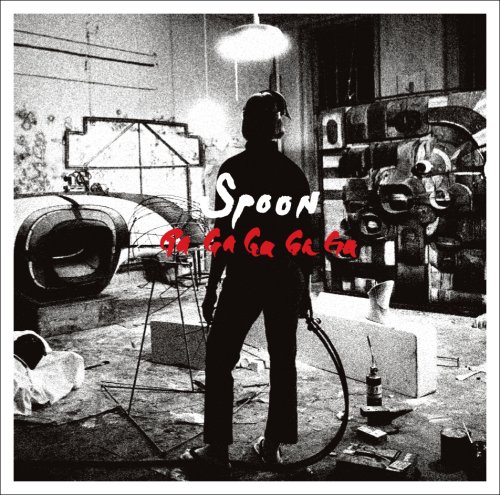
Ga Ga Ga Ga Ga is an album built on groove and texture, with brass flourishes, warped studio tricks, and swaggering confidence. “The Underdog” remains a calling card, but every track offers a different flavor: the dubby haze of “Finer Feelings,” the stripped-back pulse of “Don’t Make Me a Target,” and the cinematic sweep of “Black Like Me.” Produced with a pop sheen that never loses the band’s edge, it’s Spoon’s most accessible record—and arguably their most ambitious. Sleek yet scrappy, this is the sound of a band fully locked in and on any given day, it could land at the very top of their discography.
Key Track: “You Got Yr. Cherry Bomb” – Retro soul filtered through Spoon’s stripped-down filter. Horns, handclaps, and heartbreak never sounded so precise.
Sleek, catchy, and sonically rich—Spoon at their most accessible and confident.
1. Kill the Moonlight (2002)
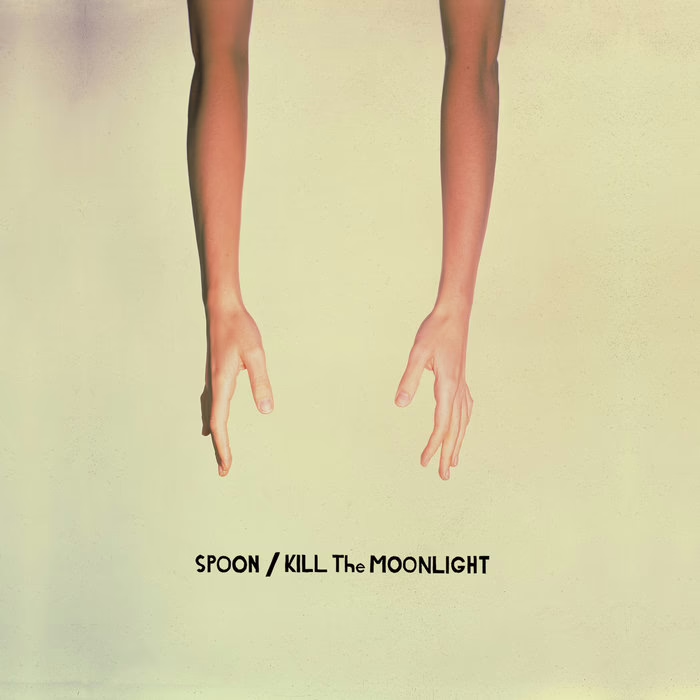
Spoon’s finest hour is a masterclass in restraint. Kill the Moonlight strips everything down to essentials with snare cracks, dry piano stabs, and negative space become instruments in their own right. “The Way We Get By” may be the entry point, but it’s tracks like “Small Stakes” and “Paper Tiger” that show how radical this minimalism really was. Britt Daniel’s voice sounds coiled and clever, spinning tension out of the smallest moments. From the Motown shuffle of “Don’t Let It Get You Down” to the emotional churn of “Vittorio E.,” this is indie rock precision with pop instincts and avant-garde boldness. No record better defines Spoon’s unique balance of sharpness and soul.
Key Track: “The Way We Get By” – A timeless piano-driven anthem that flips youthful rebellion into a pop mantra, and gave Spoon their first real crossover moment.
A lean, nervy, and sonically adventurous landmark in indie minimalism.
Final Groove
Spoon’s greatest strength might be their consistency. Not many other indie band has released this many great albums over this long a stretch without ever falling flat. Whether dabbling in psych-funk, piano pop, or stripped-down rock, they’ve always trusted the power of doing more with less. Kill the Moonlight and Ga Ga Ga Ga Ga might be the crown jewels, but nearly every release has something essential. As they step into 2026 with a rumored new record on the horizon, Spoon remains one of the most quietly legendary acts of their generation: sharp, stylish, and still full of surprises.
SPOON LINKS
Website | Facebook | Instagram | Bandcamp

A lifelong fan of new music—spent the '90s working in a record store and producing alternative video shows. In the 2000s, that passion shifted online with blogging, diving headfirst into the indie scene and always on the lookout for the next great release. Still here, still listening, and still sharing the best of what’s new.
- Christopher Anthonyhttps://thefirenote.com/author/canthony/
- Christopher Anthonyhttps://thefirenote.com/author/canthony/
- Christopher Anthonyhttps://thefirenote.com/author/canthony/

- Christopher Anthonyhttps://thefirenote.com/author/canthony/