Amplified Vault: A Monthly Deep Dive into Iconic Albums & Artists
Amplified Vault unpacks legendary discographies, decoding what made or makes them matter—and how they resonate. For this installment, we dive into the ferocious, fast-evolving world of Hüsker Dü—post-punk pioneers who blurred the lines between hardcore, melody, and emotional rawness. In less than a decade, they reshaped underground rock forever and laid the groundwork for the alternative explosion to come.
Amplified Vault: Decoding Hüsker Dü – Zen & the Art of Destruction (Album Ranking)
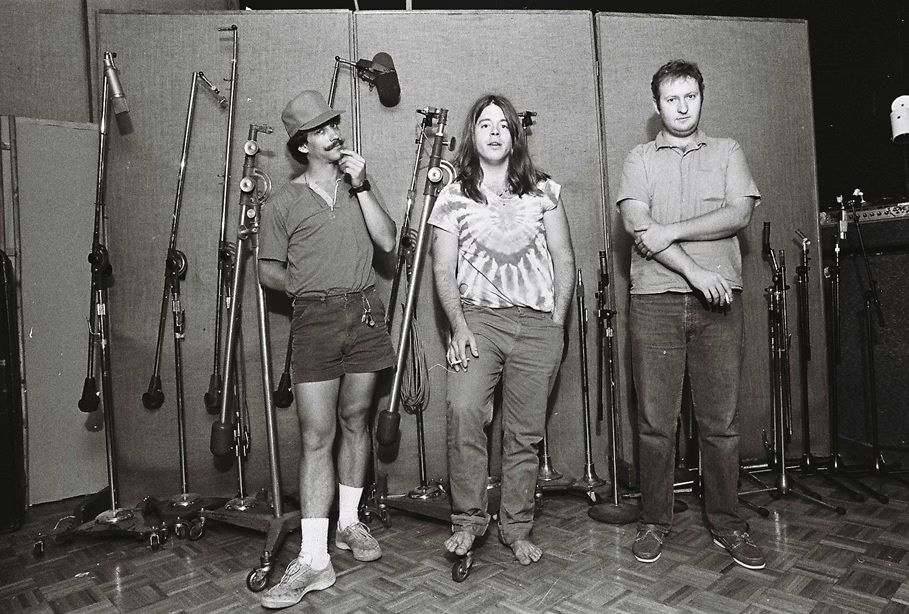
Pioneers. Powerhouses. Sonic Revolutionaries.
Amplified Vault unpacks legendary discographies, decoding what made them matter—and how they still resonate. For this installment, we jump headlong into the furious, melodic, and genre-defying world of Hüsker Dü. In just six years, the Minneapolis trio burned white-hot through punk orthodoxy, hardcore’s speed trials, and college rock’s emotional expanse—helping define what alternative music would become. With Bob Mould’s ragged guitar fury, Grant Hart’s mercurial brilliance, and Greg Norton’s rumbling glue, Hüsker Dü built a body of work that still sounds restless and revelatory. From DIY sprints to major-label depth charges, their records remain essential documents of power, vulnerability, and forward motion.
Bonus Entry: 1985 – The Miracle Year (2025)
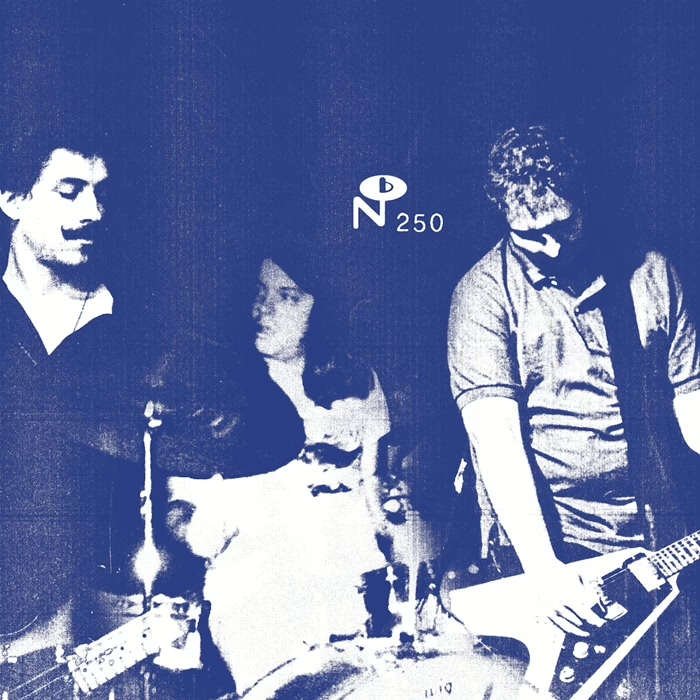
Forty years later, the long-rumored First Avenue live album finally arrives—and it’s worth the wait. 1985: The Miracle Year captures Hüsker Dü in peak form: mid-blizzard in Minneapolis, mid-transition from SST cult heroes to Warner Bros. boundary-breakers. This live set surges with electric purpose, blending then-new New Day Rising material with unreleased tracks, deep cuts, and covers of everyone from The Byrds to The Beatles. Originally recorded with a 24-track mobile unit for a Reflex Records live release that never happened, this will be the best-sounding Hüsker Dü live document we have. It’s historic, furious, and wholly alive.
Key Track: “Ticket to Ride” – An amp-blasted Beatles cover delivered with punk velocity and pop reverence.
A blistering live time capsule from the exact moment Hüsker Dü began to transcend everything. This will be officially released on November 7, 2025 via Numero Group.
7. Land Speed Record (1982)
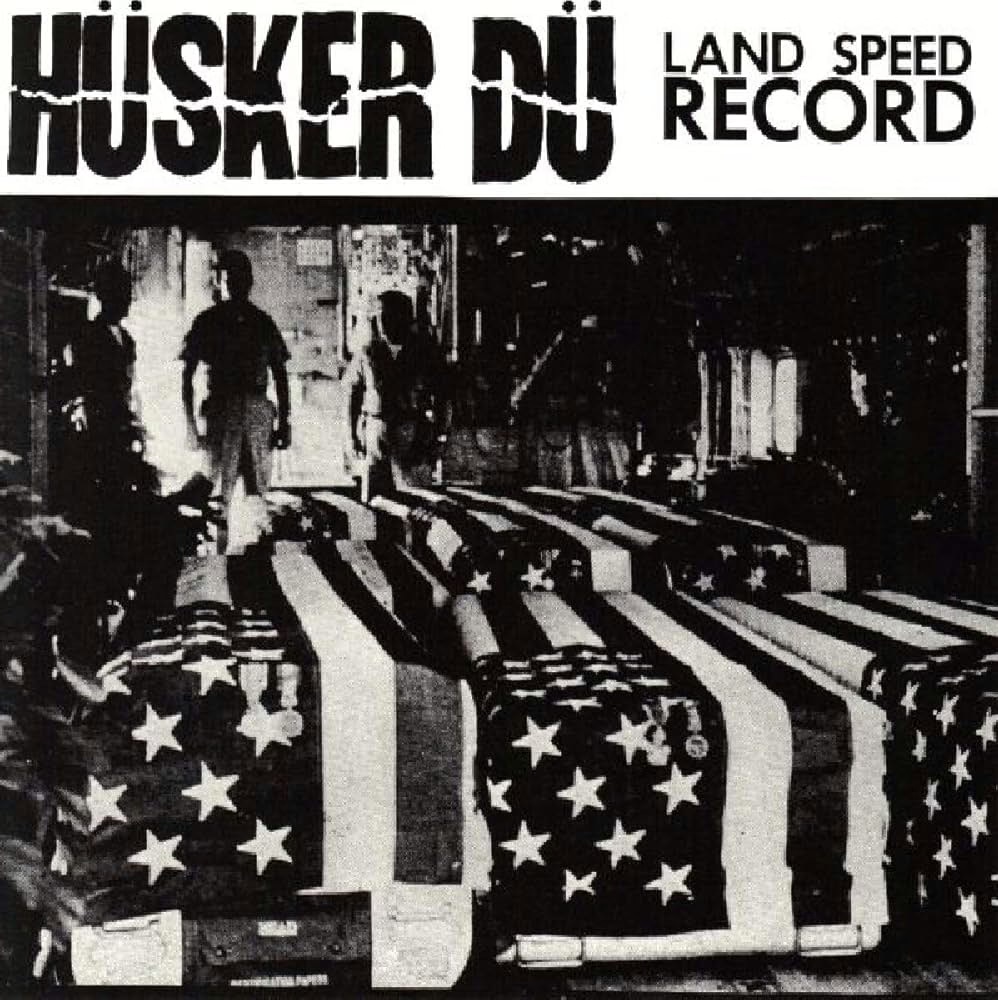
A live album in name, Land Speed Record is really a primal burst—17 songs, 26 minutes, recorded to tape in front of a Minneapolis crowd. It’s fast, brutal, and unrelenting, more statement of velocity than vision. But buried in the blitz is a blueprint: the speed, the feedback, and the barely-contained chaos would eventually be redirected into more tuneful territory. As a historical document, Land Speed is essential—it shows where Hüsker Dü started, a hardcore juggernaut driven by adrenaline and hunger. Listening now, it’s the sound of a fuse being lit. Not their best, but definitely their rawest.
Key Track: “Data Control” – A snarling finale that slows just enough to show hints of what’s next.
A breakneck baptism in volume and velocity—chaotic beginnings from a band destined for reinvention.
6. Everything Falls Apart (1983)
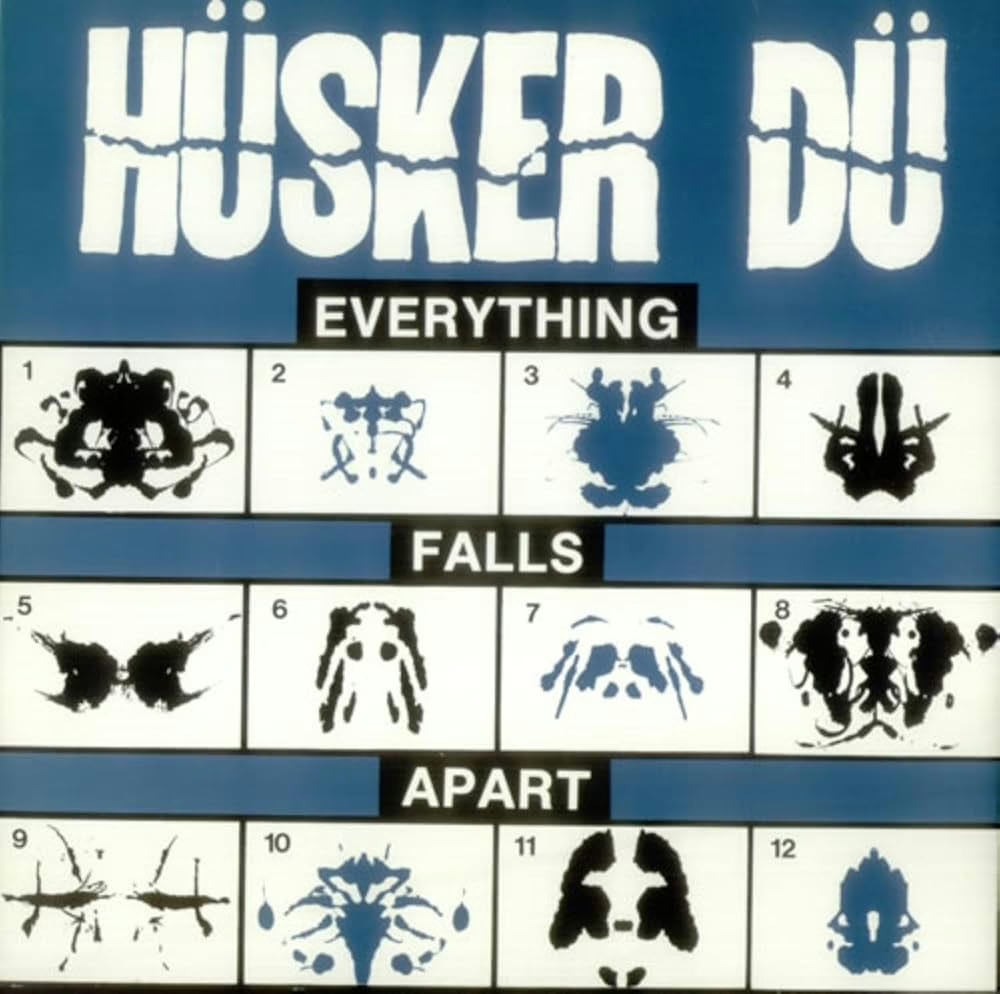
A sonic leap from Land Speed Record, this early album finds the band tightening their attack and sharpening their hooks. The production is still raw, but the songs are more structured, with glimpses of the melodic brilliance that would later define their peak. Hardcore roots are still front and center—fast, aggressive, and socially pointed—but tracks like “Target” and “Gravity” hint at broader ambitions. Their take on “Sunshine Superman” is a signpost too: Hüsker Dü were always more than punk traditionalists. If this record often gets overlooked, it shouldn’t—Everything Falls Apart is their first real declaration of range and intent.
Key Track: “Gravity” – A melodic burner that foreshadows their pop instincts underneath the punk grit.
A short, feral document of a band just beginning to rewrite the rules.
5. Candy Apple Grey (1986)
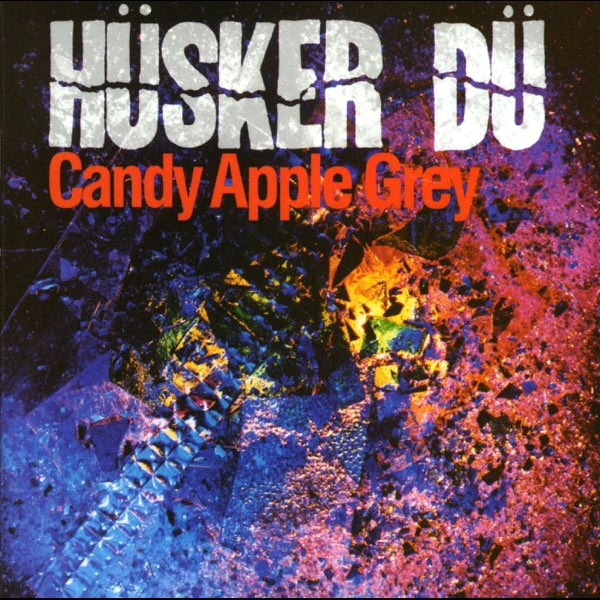
The band’s Warner Bros. debut finds Hüsker Dü evolving beyond hardcore, fully embracing melodic songwriting and deeper emotional terrain. Both Mould and Hart explore vulnerability more directly, with acoustic guitars and pianos joining the fuzzed-out mix. There’s still bite—especially on “Don’t Want to Know If You Are Lonely” and “Crystal”—but the sadness cuts sharper, and the production is cleaner, giving the lyrics more space to land. Candy Apple Grey signals a shift from volume as catharsis to melody as melancholy, widening the band’s audience while deepening their songwriting. It’s transitional and deeply affecting, planting seeds for alternative rock’s future.
Key Track: “Hardly Getting Over It” – A slow-burning lament that strips everything down to grief and guitar shimmer.
A dark, aching bridge between SST ferocity and major-label introspection.
Hüsker Dü Essentials: Deep Cuts & Hidden Gems
A few feral b-sides, early signals, and rare performances that remind us why Hüsker Dü remains one of punk’s most enduring forces.
“In A Free Land” – 1982 Single
Before the hardcore scene fully caught on, this early single already pointed toward Hüsker Dü’s melodic evolution. Still hits like a mission statement.
“It’s Not Funny Anymore” – Metal Circus EP
A simmering Grant Hart cut that delivers emotional tension and tuneful punch in just over two minutes. A signpost to where they were headed.
“Eight Miles High” – 1984 Single
Their pulverizing Byrds cover stretches out and combusts. A fan-favorite outlier that brought psychedelia and post-punk noise into direct collision.
“All Work And No Play” – Don’t Want To Know If You Are Lonely (Single)
Clocking in past 8 minutes, this Candy Apple-era B-side finds the band stretching their power-pop instincts into something hypnotic and heavy.
“Writer’s Cramp” – Savage Young Dü
This fast, jagged blast of early energy captures the band’s rawest impulses before they fully locked into their melodic stride. Released for the first time in this box set, it shows the trio already weaponizing their speed and sarcasm with tight precision.
“Love Is All Around” – Makes No Sense At All (Single)
Their punked-up spin on the *Mary Tyler Moore Show* theme was always a live show closer—and a local wink to their Minneapolis roots.
4. New Day Rising (1985)
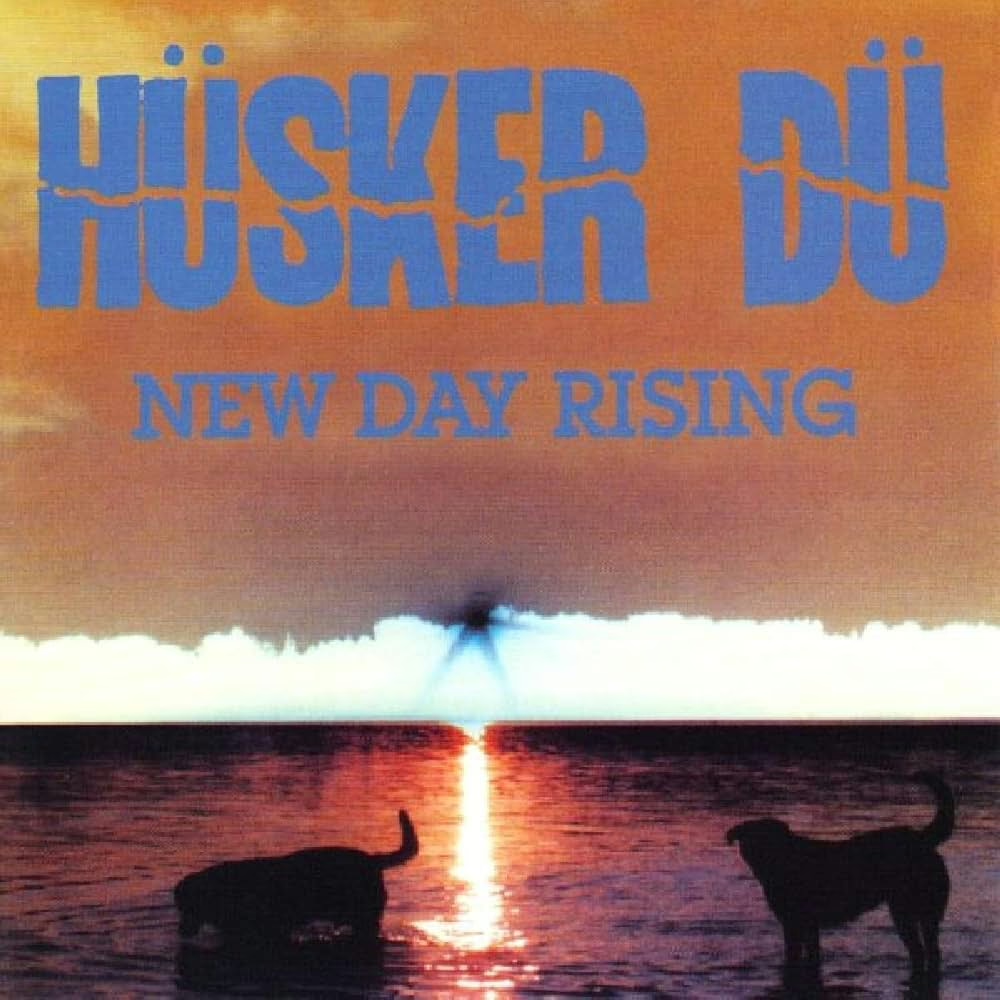
Released just six months after Zen Arcade, New Day Rising trades conceptual sprawl for focus and fire. It’s Hüsker Dü’s most elemental album—compressed fuzz, yearning vocals, and breakneck rhythms stretched to the edge of collapse. From the opening title track’s chant to the soaring harmonies of “Celebrated Summer,” Mould and Hart lock into emotionally potent territory, balancing introspection and rage with anthemic momentum. There’s little room for polish here, but that’s the point—this is the sound of urgency, catharsis, and creative combustion. Shorter, sharper, and in many ways more distilled than its predecessor, New Day Rising is pure propulsion.
Key Track: “Celebrated Summer” – A wistful, explosive remembrance of youth—the sound of growing up at full volume.
Fuzzed-out, frayed, and ferociously alive, this is Hüsker Dü caught mid-leap.
3. Flip Your Wig (1985)
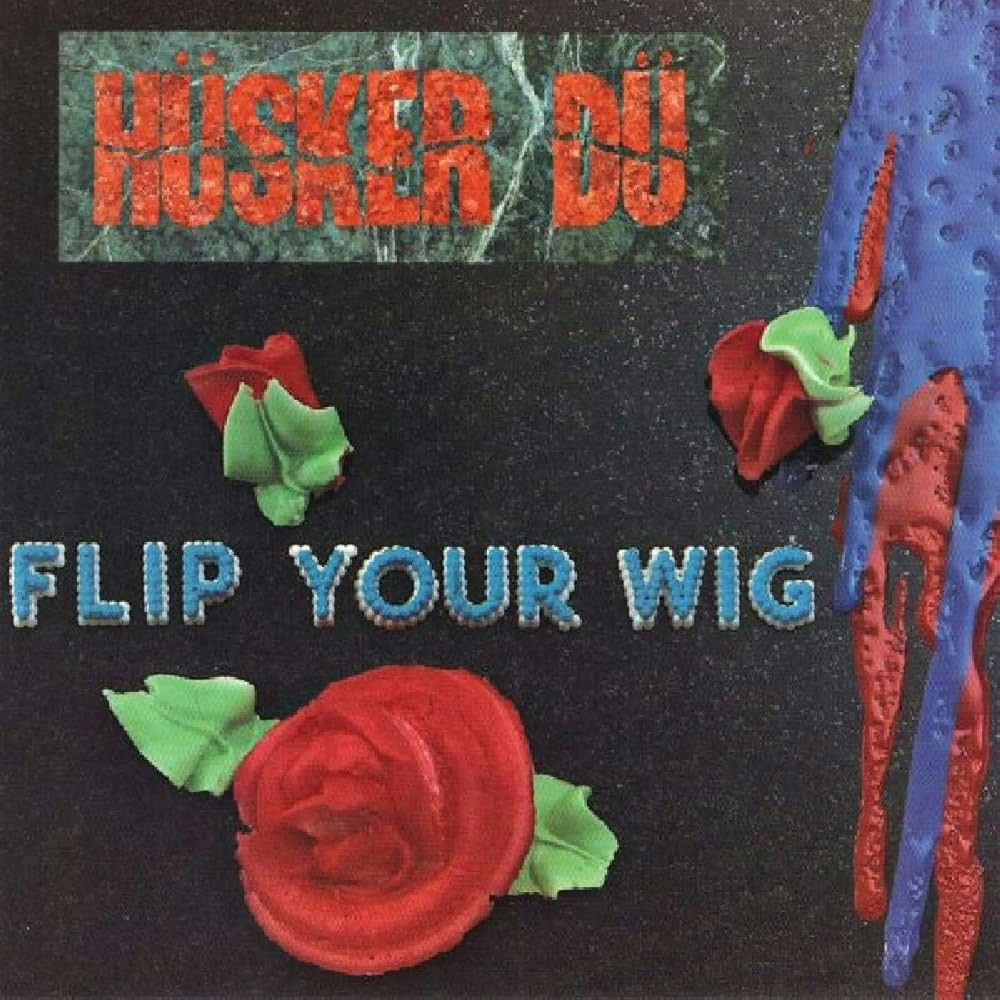
The most pop-forward album in their SST era, Flip Your Wig was also their last for the indie label—and it sounds like a band bursting with ideas and confidence. Mould and Hart trade off increasingly melodic and structurally daring songs, pushing their harmonies and production into new territory without sacrificing volume. The fuzz is cleaner, the vocals clearer, and the hooks more irresistible than ever. Though written and recorded at breakneck speed (mere months after New Day Rising), the band’s chemistry is electric and fully evolved. If Zen Arcade was punk as art, Flip Your Wig is punk as pop gold.
Key Track: “Makes No Sense at All” – A jagged, catchy rush of disillusionment—anthemic without losing its bite.
Their hookiest and most approachable album, where Hüsker Dü makes noise feel like sunshine.
2. Zen Arcade (1984)
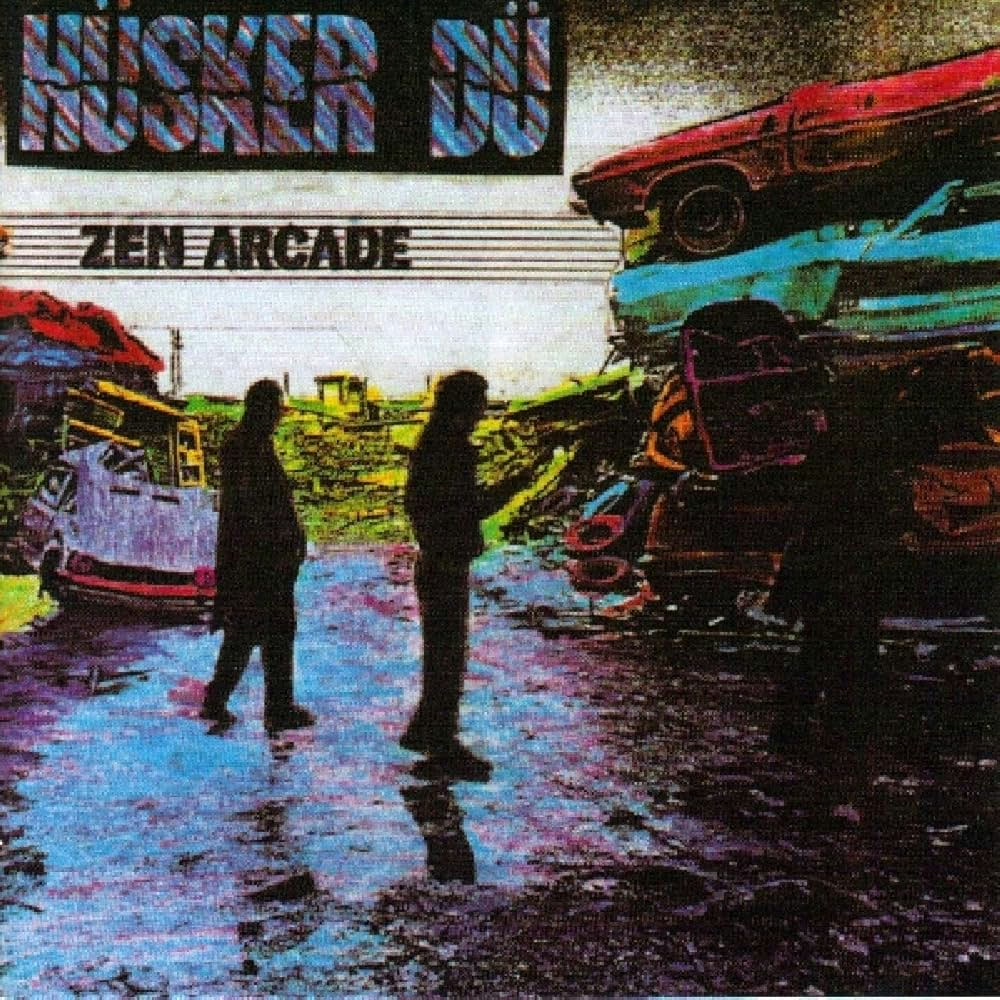
Zen Arcade is the genre-smashing masterwork that redefined what hardcore punk could be. Across 23 tracks, Hüsker Dü expanded their sonic vocabulary beyond aggression—into psychedelia, acoustic passages, tape loops, piano, and conceptual storytelling. The plot follows a young runaway disillusioned with modern life, but the real journey is musical: shifting from pummeling rage to mournful introspection, often within minutes. Recorded and mixed in 85 hours, the album’s raw execution only intensifies its ambition. It became an immediate blueprint for post-hardcore, alt-rock, and the idea that underground bands could think on a grand scale without losing their fire.
Key Track: “Chartered Trips” – Mould’s swirling melodic anthem fuses speed with emotional clarity—it’s escape as philosophy.
A punk rock opera of discontent and discovery, this is Hüsker Dü’s mission statement writ large.
1. Warehouse: Songs and Stories (1987)
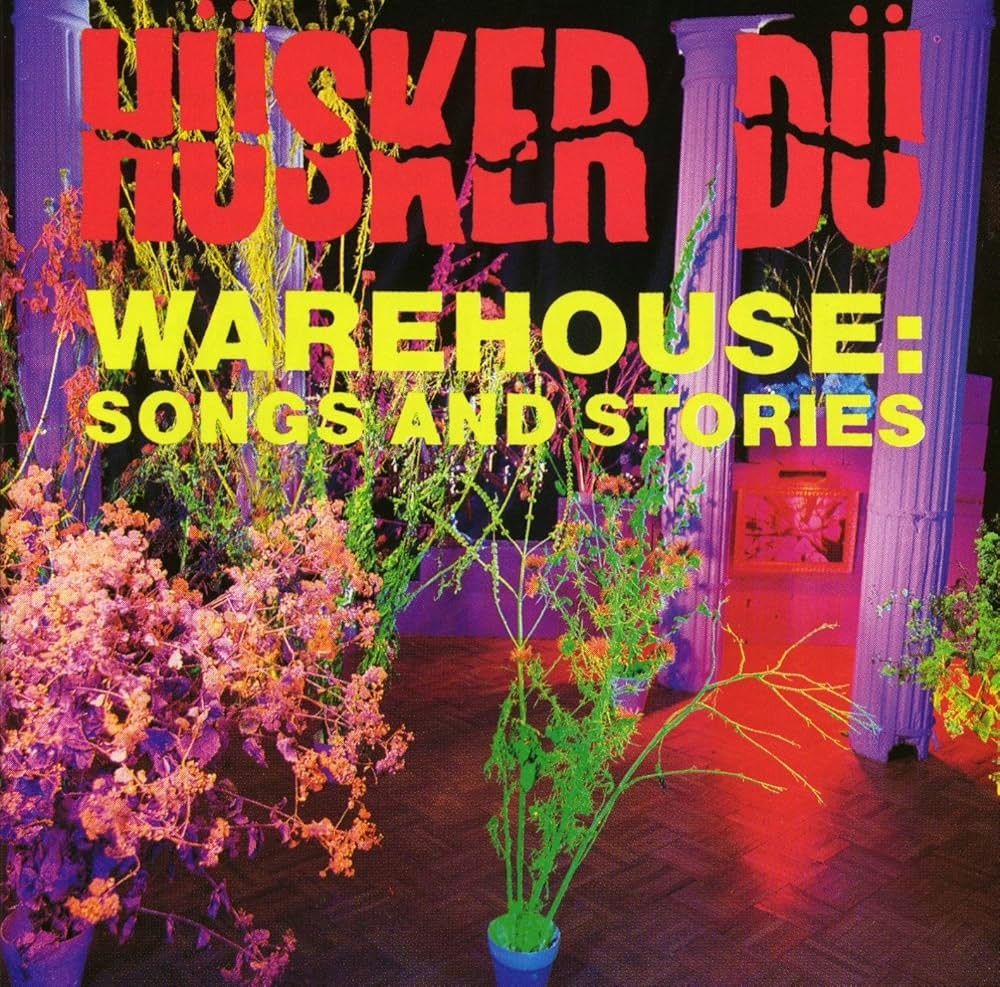
Released as a sprawling double LP, Warehouse marks the final Hüsker Dü studio album and captures the band at their melodic, mature peak. Bob Mould and Grant Hart deliver some of their most emotionally nuanced writing, exploring regret, aging, addiction, and disillusionment within walls of fuzzy guitar and polished hooks. At the time of release, the album alienated some long-time fans with its cleaner sound—but time heals all. In hindsight, the record offers a panoramic summation of Hüsker Dü’s range, with clear echoes of Mould’s future work in Sugar and solo. It’s also remembered for the behind-the-scenes tension, with Mould reportedly believing Hart’s songs on Warehouse could have been trimmed for greater impact. He may have been right – maybe if it had been trimmed back to a single LP, the record would be seen today as a defining indie-rock album of the era. Regardless, over time Warehouse has risen to the top of their catalog—less a swan song and more a bold final chapter that still stings with what-ifs.
Key Track: “Up in the Air” – Hart’s wistful, harmony-laced gem radiates power-pop shimmer and personal heartbreak.
The band’s most expansive and emotionally resonant album—an epic exit with everything left on the table.
Final Groove
Hüsker Dü didn’t just change punk—they obliterated its borders. In just over half a decade, they evolved from primal-speed merchants to emotionally nuanced songwriters, crafting albums that inspired generations of indie and alt-rock bands to follow. Whether channeling adolescent rage, existential dread, or bittersweet optimism, they proved melody and mayhem weren’t mutually exclusive. The tapes still smoke. The songs still land like bricks through stained glass. And even now, in reissues and long-lost recordings, their flame continues to throw off sparks. Hüsker Dü may be long gone, but their aftershocks are still shaping what underground music dares to sound like.

A lifelong fan of new music—spent the '90s working in a record store and producing alternative video shows. In the 2000s, that passion shifted online with blogging, diving headfirst into the indie scene and always on the lookout for the next great release. Still here, still listening, and still sharing the best of what’s new.
- Christopher Anthonyhttps://thefirenote.com/author/canthony/
- Christopher Anthonyhttps://thefirenote.com/author/canthony/
- Christopher Anthonyhttps://thefirenote.com/author/canthony/

- Christopher Anthonyhttps://thefirenote.com/author/canthony/